

News
Kunststoff
Unternehmen
INNOTEQ 2023: Nachhaltige Swissness für die MEM-Industrie


As the demand for large-scale cell culture continues to grow in biopharmaceutical manufacturing, vaccine production, academic research, and laboratory testing, bulk purchasing of Cell Culture Flask products has become increasingly important for laboratories and distributors worldwide. Choosing the right Cell Culture Flask supplier not only affects cell growth performance but also directly impacts operational efficiency, production consistency, and procurement costs.
This guide explores the key factors buyers should consider when purchasing Cell Culture Flask products in bulk, helping laboratories and distributors make informed procurement decisions.
Why Bulk Purchasing of Cell Culture Flask Matters
For research institutes, biotechnology companies, and pharmaceutical manufacturers, Cell Culture Flask products are essential daily consumables. Bulk purchasing offers several advantages, including:
Reduced procurement costs
Stable product supply
Consistent product quality between batches
Simplified inventory management
Better customization opportunities
By establishing long-term cooperation with a reliable Cell Culture Flask manufacturer, laboratories can improve workflow efficiency while maintaining consistent experimental results.
Choose the Right Cell Culture Flask Specifications
Before placing bulk orders, buyers should first determine the appropriate Cell Culture Flask specifications according to their applications.
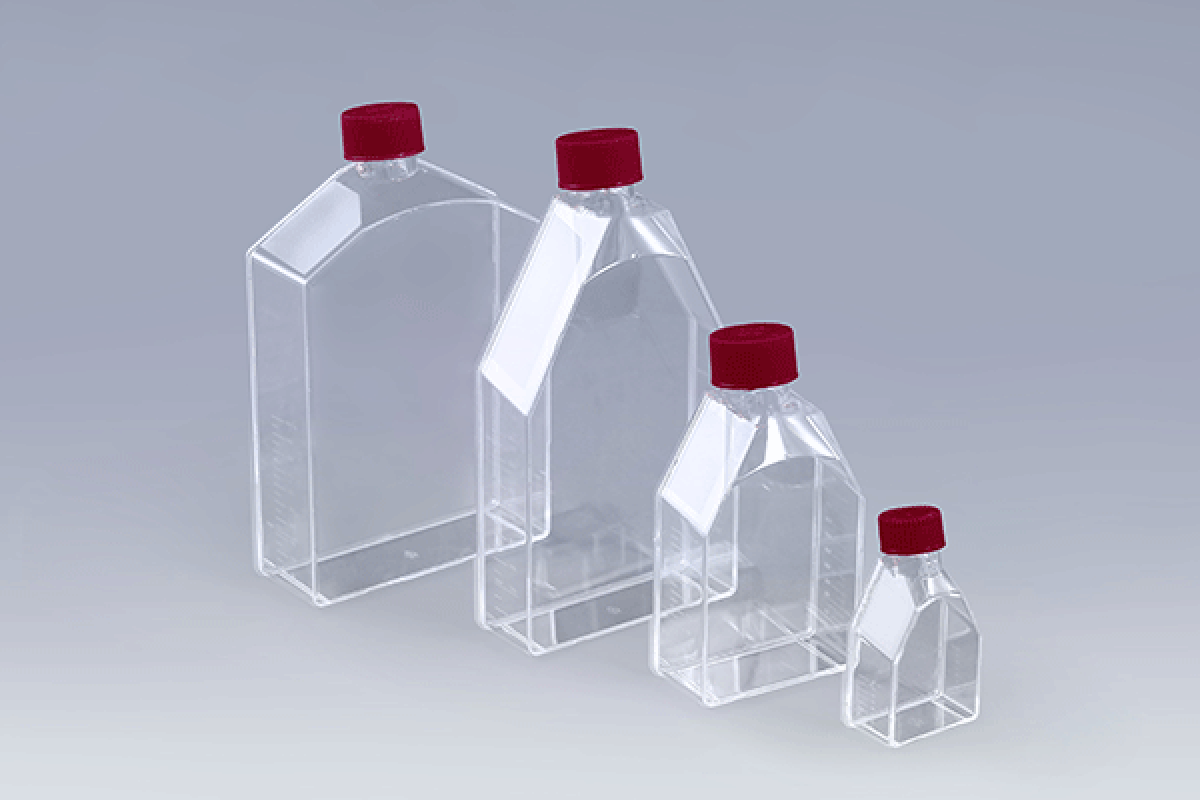
Common Cell Culture Flask sizes include:
T25 Cell Culture Flask
T75 Cell Culture Flask
T175 Cell Culture Flask
T225 Cell Culture Flask
Different cultivation scales require different flask capacities. Smaller flasks are ideal for preliminary research and cell expansion, while larger Cell Culture Flask formats are suitable for high-density cell cultivation and large-scale experiments.
In addition to size, buyers should also consider:
Vented caps or plug seal caps
TC-treated or non-treated surfaces
Sterile packaging requirements
Graduation accuracy
Surface area requirements
Selecting the correct Cell Culture Flask configuration helps optimize cell growth conditions and laboratory efficiency.
Understand Surface Treatment Requirements
Surface treatment is one of the most important factors when selecting a Cell Culture Flask.
TC-Treated Cell Culture Flask
TC-treated Cell Culture Flask products are specially surface-modified to improve hydrophilicity and enhance cell attachment. These flasks are suitable for adherent cell culture applications such as:
HEK293 cells
Vero cells
CHO cells
Fibroblasts
Non-Treated Cell Culture Flask
Non-treated Cell Culture Flask products are generally used for:
Suspension cell culture
Sample storage
Media preparation
Microbial applications
Choosing the appropriate surface treatment ensures better cell adhesion, growth performance, and experimental reproducibility.
Evaluate Product Quality Standards
When purchasing Cell Culture Flask products in bulk, product quality should always be a top priority.
A reliable Cell Culture Flask manufacturer should provide:
ISO-certified production systems
Cleanroom manufacturing environments
Sterility assurance
Endotoxin testing reports
DNase/RNase-free certification
Batch traceability
High-quality Cell Culture Flask products help reduce contamination risks and improve consistency across experiments and production batches.
Transparency and material quality are also important. Premium Cell Culture Flask products are typically made from high-clarity polystyrene, allowing researchers to easily observe cell morphology during cultivation.
Consider Packaging and Logistics Efficiency
Bulk purchasing often involves international shipping and long-term storage. Therefore, packaging quality and logistics capability are critical.
Good Cell Culture Flask packaging should:
Prevent damage during transportation
Maintain sterility
Support efficient warehouse storage
Reduce shipping costs
For distributors and OEM customers, customized packaging services can also improve brand presentation and market competitiveness.
Choosing a Cell Culture Flask supplier with stable production capacity and reliable delivery schedules helps avoid supply interruptions that could impact laboratory operations or manufacturing timelines.
OEM and Customization Services
Many distributors and laboratory suppliers prefer private label Cell Culture Flask products to strengthen their market presence.
A professional Cell Culture Flask manufacturer should offer:
OEM branding
Customized packaging
Label printing
Barcode support
Product specification customization
Flexible OEM services can help distributors build their own laboratory consumables brand while maintaining consistent product quality.
Compare Cost and Long-Term Value
While price is always an important consideration, the lowest-cost Cell Culture Flask is not always the best option. Buyers should evaluate the overall value, including:
Product consistency
Cell growth performance
Contamination control
Delivery reliability
Technical support
Supplier reputation
A stable and reliable Cell Culture Flask supplier can significantly reduce operational risks and improve long-term procurement efficiency.
Conclusion
Bulk purchasing of Cell Culture Flask products requires careful evaluation of specifications, surface treatment, product quality, packaging, logistics, and supplier capabilities. By selecting the right Cell Culture Flask manufacturer, laboratories and distributors can ensure reliable cell culture performance, reduce operational costs, and maintain stable supply chains.
As cell culture applications continue to expand across biotechnology and pharmaceutical industries, high-quality Cell Culture Flask products remain essential tools for achieving efficient and reproducible cell cultivation results.