

News
Kunststoff
Unternehmen
INNOTEQ 2023: Nachhaltige Swissness für die MEM-Industrie


In modern vaccine manufacturing, cell culture remains the foundation of viral propagation and antigen production.From classical inactivated vaccines to advanced viral vector and mRNA platforms, the performance of cell culture systems directly determines the yield, consistency, and safety of vaccine products.
However, as production scales up, new challenges emerge — including contamination risk, unstable growth conditions, and inconsistent viral titers.This article explores key adjustments and practical solutions in cell culture for vaccine production, focusing on how closed cell factory systems with tubing connections are reshaping the process.
I. The Role of Cell Culture in Vaccine Production
In most vaccine production lines, anchorage-dependent cells such as Vero, MDCK, and HEK293 are used as host cells.
These cells are typically cultivated on large surface areas where viral infection and amplification occur.
Efficient and stable cell growth depends on:
Controlled pH and dissolved oxygen levels;
Consistent nutrient and metabolite distribution;
Reliable large-area culture systems.
Traditional open systems, such as roller bottles or manually operated cell stacks, often limit scalability and increase contamination risk due to repeated manual handling.
II. Key Challenges in Large-Scale Vaccine Cell Culture
1. Contamination Risks
Frequent manual operations — such as inoculation, feeding, and harvesting — expose the system to airborne particles and microbial contaminants.
Once contamination occurs, entire batches may be lost, causing major production delays.
2. Environmental Control Limitations
Maintaining stable gas exchange and temperature across large culture surfaces can be difficult, resulting in uneven cell density and reduced viral yield.
3. Labor and Process Variability
Manual handling introduces operator-dependent variability, affecting process reproducibility and GMP compliance.
III. Closed-System Solutions: Cell Factories with Tubing Connections
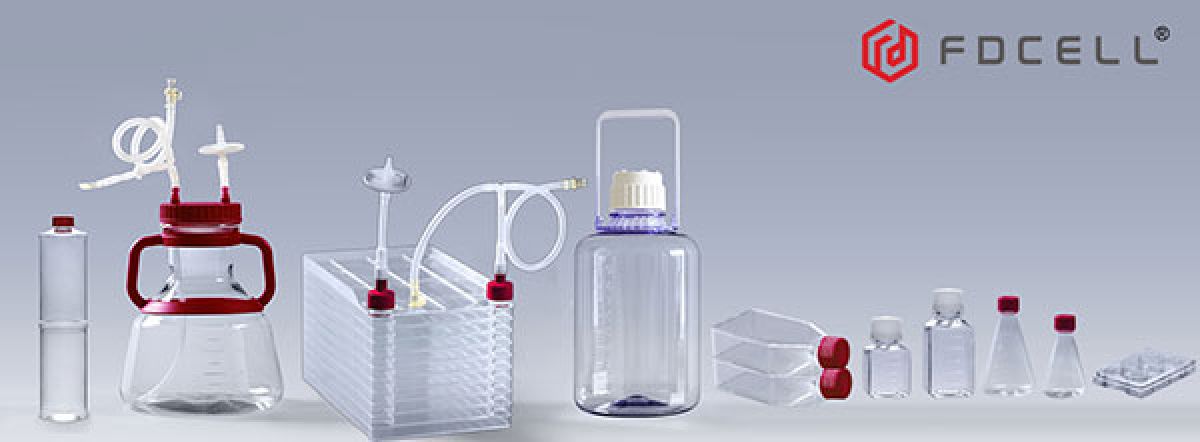
To overcome these challenges, vaccine manufacturers are increasingly adopting closed, automated cell culture systems — particularly cell factories equipped with tubing assemblies that form a sealed culture environment.
Technical Advantages:
1. Closed Operation, Reduced Contamination
All liquid handling — including seeding, feeding, and harvesting — is performed through pre-attached tubing under sterile conditions.
This eliminates the need for open transfers in laminar flow hoods, drastically reducing contamination risk.
2. Process Standardization
The use of presterilized connectors and tubing ports enables seamless integration with peristaltic pumps and automated filling systems.
This ensures consistent flow rates and reproducible culture conditions.
3. Scalability and GMP Compliance
Closed systems align with GMP cleanroom requirements by minimizing operator intervention and environmental exposure.
They also simplify documentation and process validation, supporting large-scale vaccine production.
Example: In Vero cell-based vaccine lines, switching from open multi-layer systems to closed 40-layer cell factories reduced contamination incidents by over 90% and improved viral titer uniformity between batches.
IV. Process Optimization Strategies
Even with advanced hardware, successful vaccine production requires careful optimization of culture parameters:
Medium Exchange Timing: Determine based on cell density and glucose/lactate levels.
Seeding Density: Maintain optimal confluence to ensure even viral infection.
Gas Exchange Balance: Use thin-layer media to enhance oxygen transfer without compromising nutrient stability.
Temperature and CO₂ Uniformity: Verify distribution across all layers of large-scale systems.
By combining process control with closed-system operation, manufacturers can achieve both high yield and consistent product quality.
V. Future Outlook: Automation and Integration
Next-generation vaccine facilities are moving toward integrated automated platforms that link:
Cell expansion (cell factories or bioreactors),
Virus infection and amplification,
Harvesting and clarification,
Downstream purification.
Through real-time monitoring and digital process control, these systems further improve reproducibility, reduce manual workload, and shorten production cycles.
VI. Conclusion
In the era of high-demand vaccine manufacturing, contamination control and process consistency are no longer optional — they are fundamental.
Closed cell factory systems with tubing connections represent a practical and scalable solution for modern vaccine production.
By minimizing human intervention and creating a fully enclosed culture environment, these systems ensure cleaner, safer, and more efficient vaccine manufacturing — from cell culture to final product.