

News
Kunststoff
Unternehmen
INNOTEQ 2023: Nachhaltige Swissness für die MEM-Industrie



Bridging the gap between laboratory research and biopharmaceutical production requires robust, scalable, and reproducible cell culture workflows. While large-scale bioreactors are essential for commercial manufacturing, early-stage scale-up relies heavily on the performance and consistency of the cell culture flask.
From initial cell line development to process optimization, cell flasks play a critical role in supporting controlled and predictable early scale-up.
The Role of Cell Culture Flasks in Early-Stage Development
In research and early development phases, cell culture flasks are widely used for:
Cell line recovery and expansion
Clone screening and selection
Process parameter optimization
Seed train preparation
A reliable cell flask provides a controlled environment where critical variables—such as seeding density, medium composition, and growth kinetics—can be evaluated before transitioning to larger culture systems.
Maintaining Consistency During Scale-Up Transitions
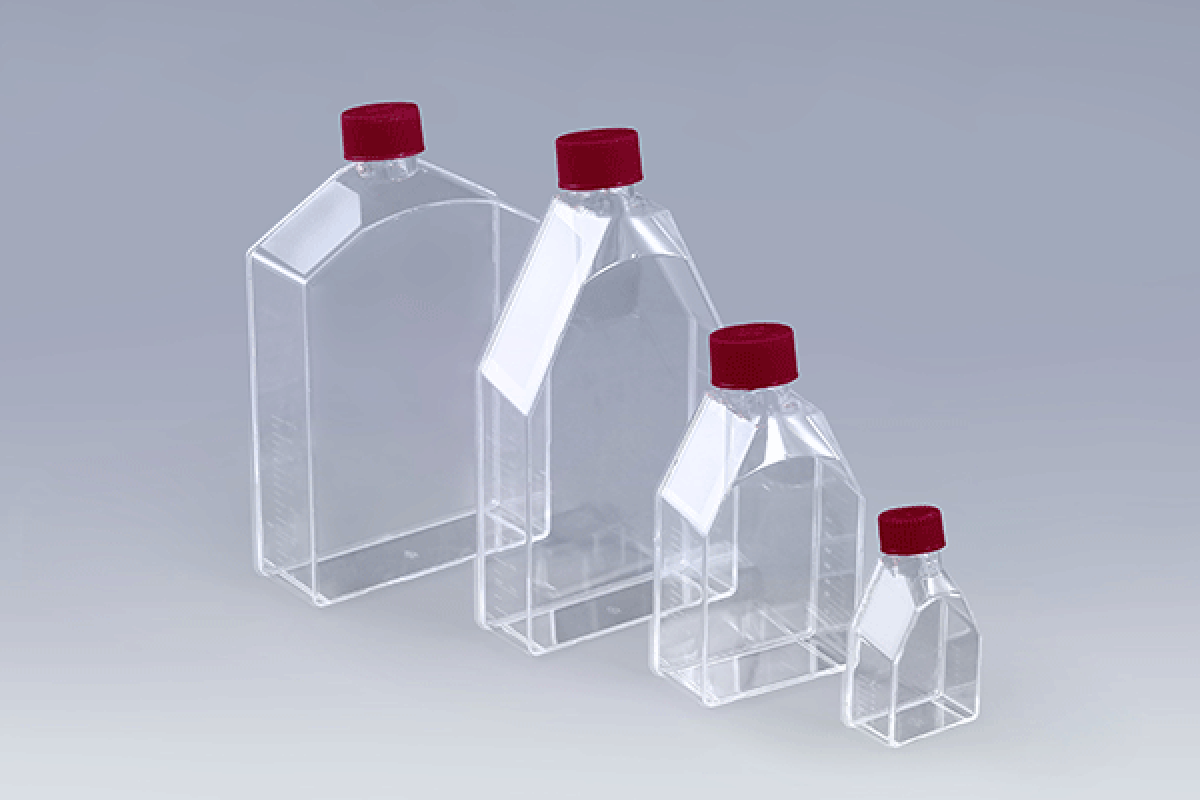
Early scale-up often involves moving from smaller formats to larger surface areas while maintaining consistent culture conditions. Cell culture flasks with defined growth areas allow researchers to scale surface area in a predictable and linear manner.
Consistent flask performance supports:
Accurate surface area–based scaling calculations
Stable cell growth behavior across passages
Reduced adaptation stress during format transitions
This consistency helps ensure that observations made at small scale remain relevant at larger volumes.
Supporting Seed Train Development
Before cells enter stirred systems or bioreactors, they typically undergo multiple expansion steps in adherent culture formats. Cell culture flasks are commonly used to establish a healthy and homogeneous seed population.
Key advantages include:
Controlled cell density and confluency
Easy monitoring of cell morphology and viability
Reduced risk of process deviations
By maintaining a stable seed train, cell flasks help improve downstream process robustness.
Process Optimization and Data Reliability
Early-stage process development requires repeated experimentation and comparison across multiple conditions. Variability introduced by consumables can obscure meaningful results.
High-quality cell culture flasks contribute to:
Improved experimental repeatability
Reduced batch-to-batch variation
More reliable process optimization data
This reliability is essential when selecting conditions that will later be transferred to production-scale systems.
Preparing for Downstream Manufacturing Platforms
As workflows transition toward larger-scale systems, data generated in cell culture flasks often inform critical decisions related to media composition, feeding strategies, and environmental parameters.
Using consistent cell flasks during early scale-up:
Improves data continuity across development stages
Reduces the need for repeated optimization
Accelerates progression toward production readiness
This makes cell culture flasks an integral component of efficient process development pipelines.
Conclusion
From research laboratories to early-stage production workflows, the cell culture flask plays a foundational role in supporting scalable and reproducible cell culture processes. By providing consistent growth environments, predictable surface area scaling, and reliable performance, cell flasks help bridge the gap between discovery and manufacturing.
Selecting well-designed and well-controlled cell culture flasks enables smoother early scale-up, stronger process understanding, and a more efficient path toward bioproduction.