
News
Kunststoff
Unternehmen
INNOTEQ 2023: Nachhaltige Swissness für die MEM-Industrie



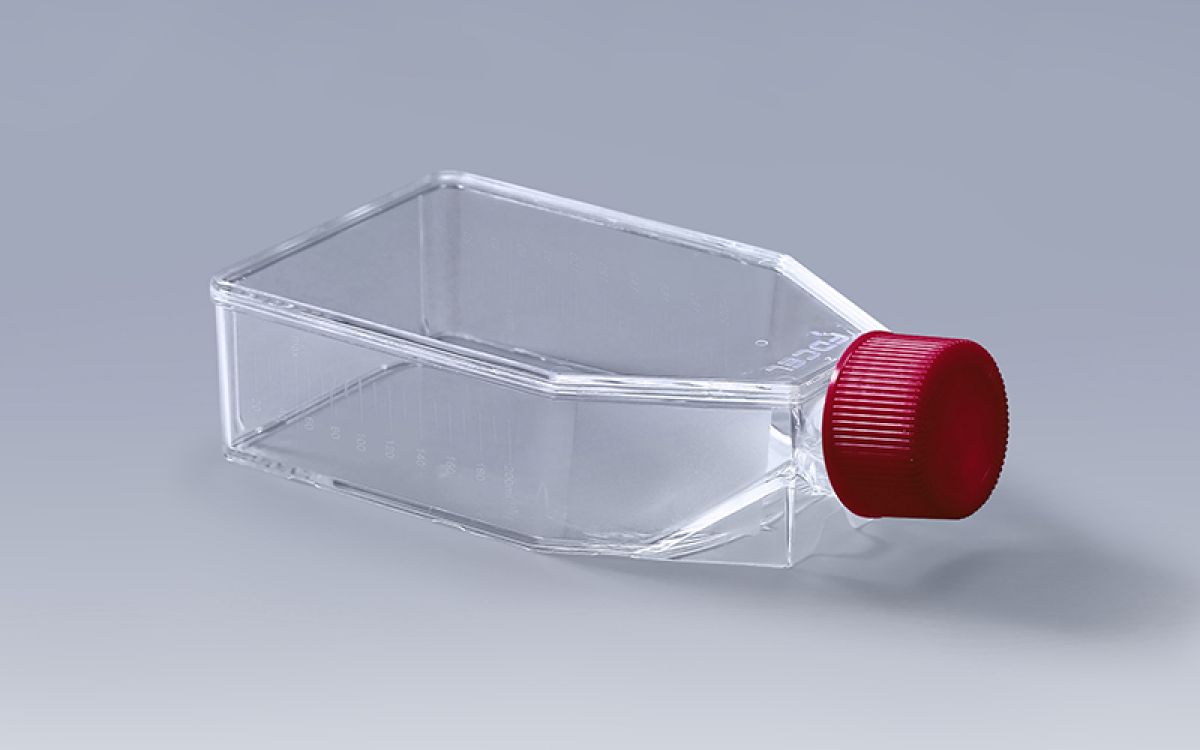
Transient expression in HEK293 cells remains one of the most widely used platforms in protein production, viral vector generation, and early-stage biotherapeutic development. Despite the rise of bioreactors, shake flasks, and automated small-scale systems, the T-flask (tissue culture flask / cell culture flask) continues to serve as the industry’s foundational tool for rapid, flexible, and reproducible transient transfection.
This article explains why tissue culture flasks remain indispensable, how they support high-yield transient expression, and best practices for maximizing performance in HEK293 workflows.
1. Why HEK293 Remains the Gold Standard for Transient Expression
HEK293 cells are preferred across research and development due to several intrinsic advantages:
• High transfection efficiency
HEK293 cells — especially HEK293T, HEK293F, and HEK293E derivatives — readily uptake plasmid DNA using PEI, lipofection, or chemical transfection systems.
• Human-like PTMs
Glycosylation, folding, and secretion pathways in HEK293 closely mimic human cells, making transiently expressed proteins suitable for:
antibody fragments
recombinant enzymes
receptor proteins
viral capsid proteins
AAV/ LV helper plasmid expression
• Fast doubling time
HEK293 grows quickly and tolerates variation in culture conditions, providing ideal flexibility for optimization studies.
These features make HEK293 one of the most reliable hosts for rapid testing, screening, and early protein engineering.
2. Why T-Flasks Are Still the Preferred Format
Although suspension systems are increasingly common, Tissue Culture Flasks remain the essential starting point for most transient expression pipelines due to four core advantages:
(1) Controlled and stable environment
Tissue Culture Flasks provide a defined growth surface, ensuring uniform cell attachment and reducing variability during transfection setup.
(2) Easy parallelization
Multiple flasks can be run in parallel to test:
different plasmid ratios
promoter designs
transfection reagents
DNA doses
media supplements
This flexibility is ideal for early optimization.
(3) Low contamination risk
Tissue culture flasks allow:
closed-cap gas exchange
minimal opening during handling
reduced aerosol exposure
This helps preserve culture integrity during plasmid introduction.
(4) Cost-effective and scalable seeding
T-flasks serve as the standard seed vessel before transitioning to:
multi-layer cell factories
spinner cultures
wave bags
single-use bioreactors
A robust seed culture ensures successful downstream expansion.
3. Best Practices for Improving HEK293 Transient Expression in T-Flasks
1). Maintain cells in exponential growth
Cells should be:
80–90% viable
~70–85% confluent at transfection
freshly passaged (within 24 hours)
Suboptimal morphology or over-confluence will sharply reduce expression.
2). Optimize DNA and reagent ratio
Common ratios that work well in T-flasks include:
PEI:DNA at 2.5:1 to 3:1 (w/w)
DNA concentration 0.8–1.5 µg/cm² surface area
Fine-tuning is essential because HEK293 sensitivity varies with passage number and media type.
3). Use serum-reduced or serum-free media during transfection
Excess serum can inhibit transfection complexes.
Most workflows use:
serum-free transfection for 4–6 hours
then switch back to growth media
This improves particle uptake and expression efficiency.
4). Maintain stable physical culture conditions
Key variables that influence HEK293’s transient expression:
CO₂ concentration (5%)
Temperature (37°C or 32°C for higher protein folding efficiency)
pH buffering capacity
Osmolality (300–350 mOsm ideal range)
T-flasks provide stable microenvironments favorable for sensitive transfection windows.
5). Gentle handling minimizes shear stress
Excessive shaking or tapping dislodges cells and lowers transfection yields.
Use slow, even motions when:
replacing media
adding DNA complexes
moving flasks in/out of incubators
4. When to Scale Up Beyond T-Flasks
Once expression conditions are optimized, workflows typically scale to:
T175 → 1–3L suspension culture
T225 / multi-layer flasks for viral vector production
3–10L bioreactor runs for early PD (process development)
However, T-flasks remain the benchmark system for:
construct screening
plasmid ratio testing
transfection reagent comparison
early process feasibility studies
Their simplicity and experimental control are unmatched at this scale.
Conclusion
Despite the growing availability of advanced bioprocess systems, T-flasks continue to be one of the most effective tools for HEK293 transient expression. They offer controlled environments, easy optimization, low contamination risk, and reliable reproducibility — all essential elements for early-stage protein, viral vector, and biotherapeutic development.
For laboratories working in gene therapy, vaccine research, protein engineering, and rapid construct screening, T-flasks remain the standard foundation for HEK293-based transient expression workflows.