

News
Kunststoff
Unternehmen
INNOTEQ 2023: Nachhaltige Swissness für die MEM-Industrie


In life science and biopharmaceutical laboratories, consistency is critical. Whether used for storing culture media, buffers, or sensitive biological reagents, every media bottle must perform reliably across batches. Even minor variations in material, dimensions, or sealing performance can impact laboratory workflows and experimental outcomes.
For this reason, leading manufacturers implement strict quality control systems and standardized production processes to ensure consistent performance in every batch of media bottles, including Square Media Bottles made from PET and PETG materials.
Raw Material Control: The Foundation of Quality
Consistent quality begins with raw materials. High-quality media bottle production relies on carefully selected PET and PETG resins that meet medical or laboratory-grade standards.
Manufacturers ensure:
Verified supplier qualification
Batch-to-batch consistency of PET and PETG materials
Controlled storage and handling of raw materials
Stable material input is essential to maintaining the mechanical strength, transparency, and chemical compatibility required for reliable media bottles.
Precision Manufacturing Processes
Modern media bottle production commonly uses injection stretch blow molding (ISBM), a process that ensures uniform wall thickness, high clarity, and structural integrity.
Key process controls include:
Precise temperature and pressure parameters
Consistent mold performance
Controlled cycle times
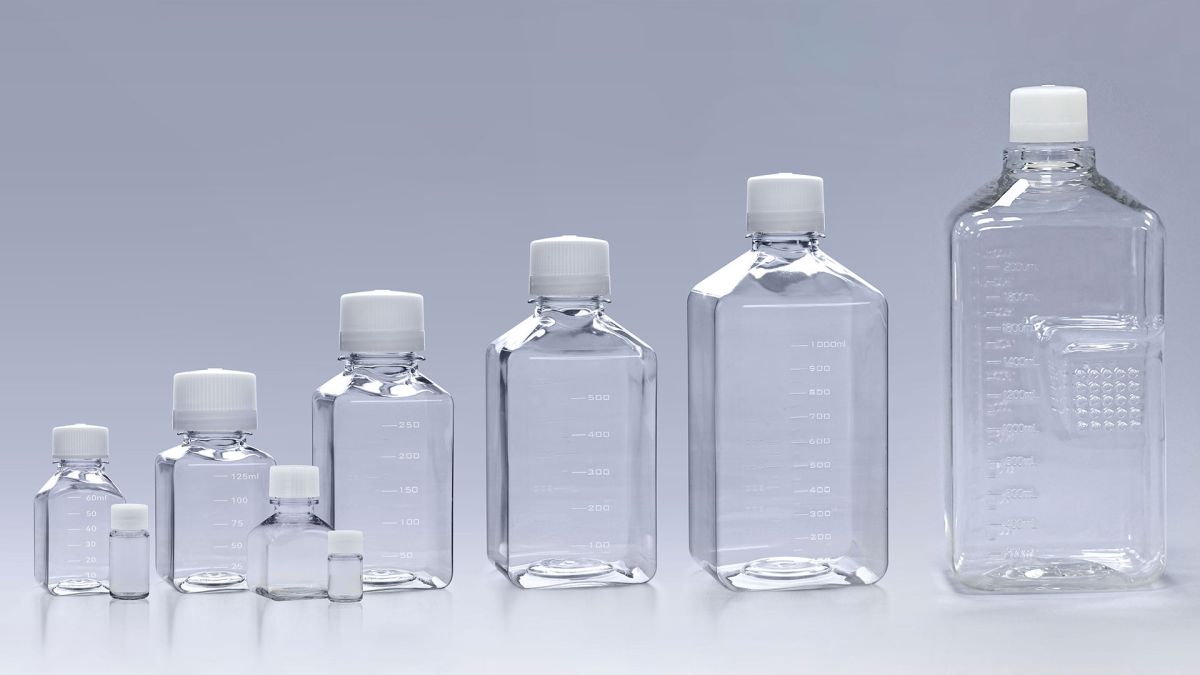
For Square Media Bottles, maintaining dimensional accuracy is particularly important to ensure proper stacking, space efficiency, and cap compatibility.
Cleanroom Production Environment
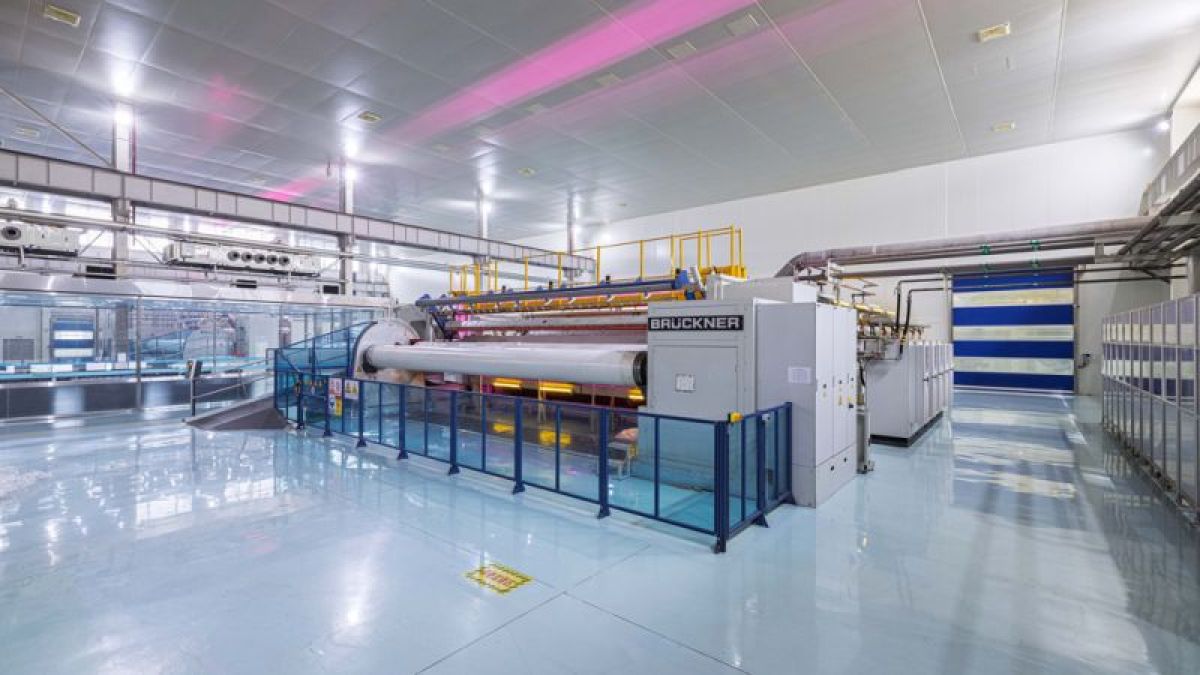
To minimize contamination risks, many manufacturers produce media bottles in controlled cleanroom environments.
This includes:
Defined cleanroom classifications
Air filtration and particle control systems
Environmental monitoring procedures
Such conditions are especially important for sterile PETG media bottle production, where cleanliness directly affects product safety and usability.
In-Process Quality Inspection
Quality is not only verified at the end of production — it is monitored throughout the manufacturing process.
Typical in-process checks include:
Visual inspection for defects
Dimensional measurement
Wall thickness consistency
Surface clarity
For Square Media Bottles, additional checks ensure flat panel integrity and uniform geometry.
Leak Testing and Closure Verification
Seal integrity is a critical aspect of media bottle performance. Manufacturers conduct leak testing to ensure reliable closure systems.
Common tests include:
Inverted leak testing
Vacuum or pressure decay testing
Cap torque verification
These tests confirm that both PET and PETG media bottles can maintain liquid containment during storage and transport.
Sterilization and Post-Processing Control
For sterile applications, PETG media bottles are often gamma-irradiated. Manufacturers validate sterilization processes to ensure:
Consistent sterility assurance levels
No material degradation
Stable bottle performance after sterilization
Post-sterilization inspection ensures that the media bottle maintains its structural and sealing integrity.
Batch Traceability and Documentation
Consistent quality also depends on traceability. Each batch of media bottles is typically linked to:
Raw material lot
Production records
Quality inspection results
Sterilization data (if applicable)
This allows manufacturers to quickly identify and address any potential issues.
Continuous Improvement and Process Validation
Leading manufacturers regularly review production data and implement continuous improvement practices.
This includes:
Process validation and revalidation
Equipment calibration
Quality trend analysis
Such efforts ensure that both standard media bottles and Square Media Bottles maintain consistent quality over time.
Conclusion
Consistent quality in media bottles is the result of controlled raw materials, precise manufacturing, rigorous testing, and comprehensive quality systems. From PET and PETG material selection to leak testing and cleanroom production, every step plays a role in ensuring reliable performance.
For laboratories handling sensitive liquids, choosing a manufacturer with strong quality control capabilities is essential. High-quality Square Media Bottles and standard media bottles produced under strict quality systems provide the reliability needed for modern life science and biopharmaceutical applications.