

News
Kunststoff
Unternehmen
INNOTEQ 2023: Nachhaltige Swissness für die MEM-Industrie


In biopharmaceutical research and laboratory operations, the safe storage of culture media, sera, and biological reagents is essential to maintaining data integrity and process consistency. As primary liquid containers, media bottles play a critical role in protecting valuable contents throughout storage and handling. Among all performance characteristics, seal integrity is one of the most important factors influencing long-term storage stability.
Insufficient sealing can lead to contamination, evaporation, chemical degradation, and ultimately the loss of critical materials.
1. Protection Against Microbial Contamination
Culture media and biological solutions are rich in nutrients, making them highly susceptible to microbial growth. If a Media Bottle does not provide an effective seal, airborne bacteria, fungi, or mycoplasma may enter through the closure interface during storage or routine handling.
Once contamination occurs, affected liquids often become unusable and may compromise downstream experimental systems, particularly in cell culture applications. Reliable sealing performance is therefore essential for maintaining sterility and protecting research outcomes.
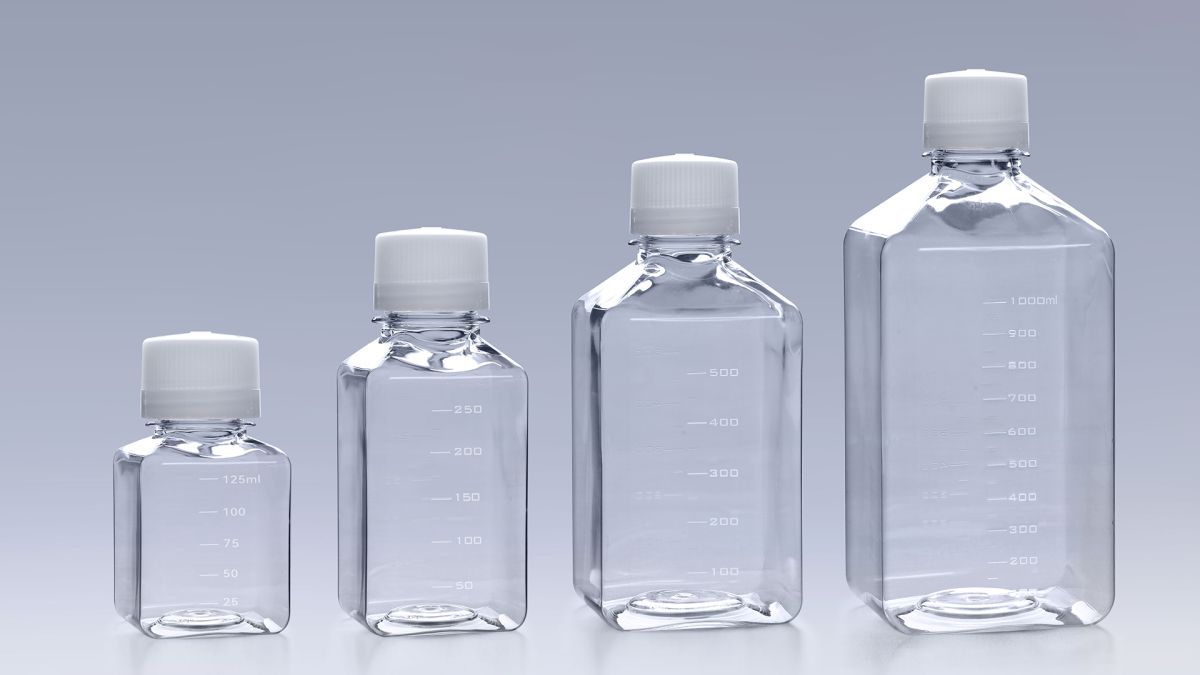
High-quality Square Media Bottles with secure closure designs provide a strong barrier against microbial ingress.
2. Prevention of Evaporation and Composition Changes
Many laboratory liquids contain volatile components or require strict concentration control. Poor seal integrity allows gradual evaporation, leading to volume reduction and formulation drift.
For cell culture media, even minor water loss can alter osmolarity and nutrient balance, negatively affecting cell growth and viability. Reagents and buffer solutions may also lose accuracy over time if volatile components escape.
A well-designed Media Bottle helps maintain consistent composition during both short- and long-term storage.
3. Stability of Internal Gas Conditions
Certain liquid formulations are sensitive to the surrounding gas environment. Examples include:
Oxygen-sensitive reagents
Media systems dependent on controlled CO₂ levels
Formulations requiring protection from atmospheric exposure
Effective sealing enables Square Media Bottles to maintain a stable internal environment by limiting gas exchange. Inadequate sealing may result in oxidation, pH shifts, or reduced reagent performance, impacting experimental reliability.
4. Reduced Risk of Leakage and Cross-Contamination
In laboratory and production environments, multiple liquid products are often stored in shared spaces. Media bottles with poor sealing performance may leak during transportation, handling, or stacking, increasing the risk of cross-contamination.
Square Media Bottles, designed with leak-resistant closures and stable geometry, help minimize these risks and support safer, more organized storage practices.
5. Conclusion: The Importance of Seal Integrity in Media Bottle
Seal integrity is a fundamental requirement for media bottles, influencing sterility assurance, formulation stability, gas control, and operational safety. Selecting a Media Bottle with reliable sealing performance is essential for laboratories seeking consistent and reproducible results.
High-performance Square Media Bottles offer a dependable solution for the secure storage of sensitive liquids, supporting research accuracy and quality-driven laboratory workflows.