

News
Kunststoff
Unternehmen
INNOTEQ 2023: Nachhaltige Swissness für die MEM-Industrie



Choosing the right culture vessel is a critical step in achieving reliable and reproducible results in suspension cell culture. Whether working with bacteria, yeast, plant cells, or animal cells, the selection of an appropriate Erlenmeyer Shake Flask directly affects mixing efficiency, oxygen transfer, and overall culture performance.
This guide outlines the key factors to consider when selecting an Erlenmeyer flask for cell culture applications.
1. Understand Your Cell Type and Application
Different cell systems place different demands on culture vessels:
Bacteria and yeast require high oxygen transfer and robust mixing
Plant cells are sensitive to shear stress and require gentle agitation
Animal cells demand low-shear environments and high material biocompatibility
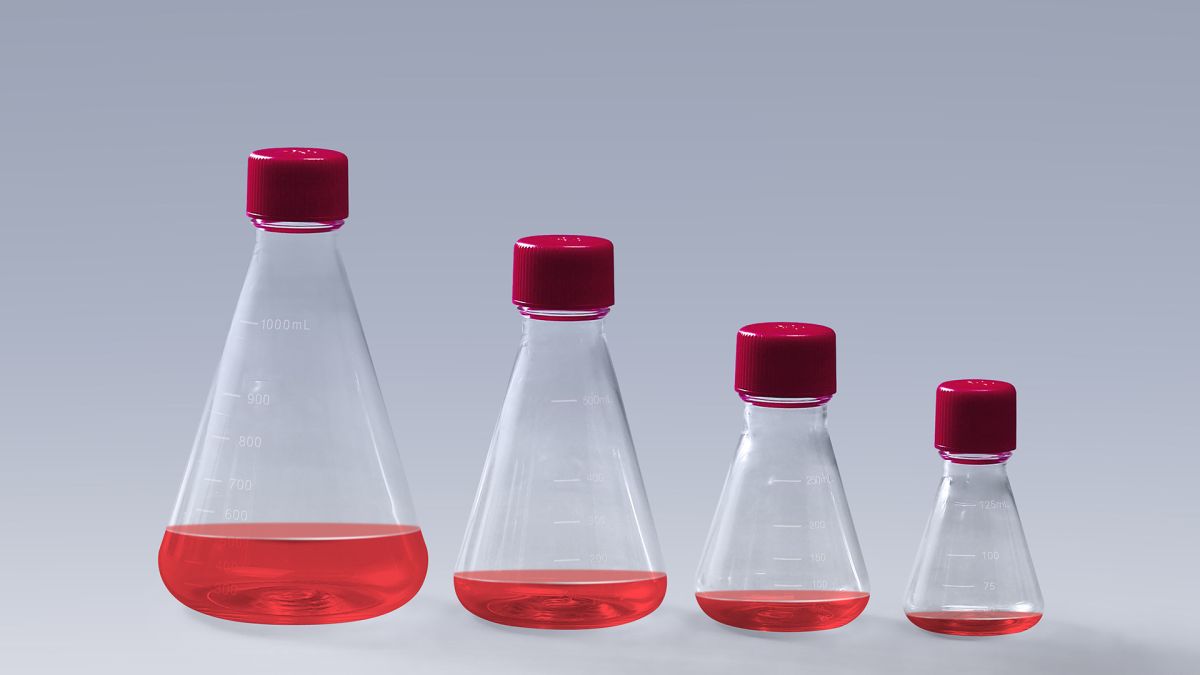
The classic Erlenmeyer Flask design—featuring a conical body and narrow neck—supports uniform mixing during shaking and serves as the foundation for modern shake flasks used across these applications.
Before selecting a flask, clearly define:
Cell type
Culture duration
Growth density
Downstream process requirements
2. Choose the Right Flask Material
Material selection plays a crucial role in cell viability and experimental consistency.
PETG and PC Shake Flasks
Modern Erlenmeyer Flask made from USP Class VI PETG or PC materials are widely used in life science laboratories due to their:
Excellent biocompatibility
Low extractables and leachables
High optical clarity for visual inspection
Improved safety compared to glass
These materials are especially suitable for single-use applications, GMP-related workflows, and high-throughput laboratories.
Glass Erlenmeyer Flasks
Traditional glass flasks are still used in some settings but require cleaning, sterilization, and careful handling. For many laboratories, disposable PETG/PC shake flasks offer greater efficiency and lower contamination risk.
3. Select the Appropriate Volume and Working Capacity
Shake flasks are available in a wide range of nominal volumes. However, the working volume is more important than the maximum capacity.
General recommendations:
Use 20–30% of the flask’s nominal volume for active cultures
Lower fill volumes improve oxygen transfer and mixing efficiency
For example, a 1,000 mL Erlenmeyer Shake Flask typically performs best with a working volume of 200–300 mL.
4. Vent Cap or Seal Cap: Make the Right Choice
Cap configuration significantly affects gas exchange and sterility.
Vent caps with hydrophobic membranes allow sterile oxygen and CO₂ exchange, making them ideal for active cell cultures
Seal caps are suitable for media preparation, mixing, or short-term storage
For most suspension cell culture applications, vent caps are recommended to maintain optimal metabolic conditions.
5. Evaluate Flask Design and Manufacturing Quality
Beyond size and material, design and manufacturing consistency also matter. High-quality Erlenmeyer Flasks typically feature:
Uniform wall thickness for stable shaking
Smooth inner surfaces to minimize cell adhesion
Clear and accurate graduation marks
Leak-proof cap-to-flask interfaces
Flasks produced under cGMP conditions with independent sterile packaging further enhance reliability, especially in regulated laboratory environments.
6. Match the Flask to Your Workflow and Scale-Up Strategy
In many workflows, Erlenmeyer shake flasks are used as part of a seed train, bridging small-scale culture and larger systems such as cell factories or bioreactors. Selecting a flask that provides consistent and scalable performance helps ensure smooth process transfer and reproducibility.
Conclusion
The right Erlenmeyer Shake Flask is not simply a container—it is a key component of a successful cell culture workflow. By considering cell type, material, working volume, cap configuration, and manufacturing quality, laboratories can select shake flasks that support reliable growth, reproducibility, and efficient scale-up.