

News
Kunststoff
Unternehmen
INNOTEQ 2023: Nachhaltige Swissness für die MEM-Industrie



In biopharma laboratories, maintaining the stability of pH-sensitive liquids is critical to ensuring process consistency, product quality, and regulatory compliance. Buffers, culture media, reagents, and intermediates can all be affected by improper packaging, making the selection of the right media bottlea key decision in laboratory operations.
This article explores the essential packaging considerations for pH-sensitive liquids and explains why Square Media Bottlesare increasingly adopted in modern biopharma labs.
1. Material Compatibility and Chemical Stability
The packaging material of a media bottle directly impacts the stability of pH-sensitive liquids. Materials with poor chemical resistance or high extractables can alter pH values over time, leading to variability in experimental or manufacturing outcomes.
Key material considerations include:
Use of PET or PETGwith low extractables and leachables
Proven compatibility with acidic and alkaline solutions
Long-term chemical stability under refrigerated or frozen conditions
PETG media bottles are widely used in biopharma labs due to their clarity, durability, and suitability for storing sensitive liquid formulations.
2. Gas Barrier Properties and pH Control
Exposure to gases such as carbon dioxide and oxygen can significantly affect the pH of stored liquids. Media bottles with inadequate gas barrier properties may allow gradual gas exchange, resulting in pH drift during storage.
A high-quality media bottleshould provide:
Effective gas barrier performance
Tight, leak-proof sealing systems
Consistent closure integrity during long-term storage
These features are particularly important for buffers and culture media used in cell culture and bioprocessing applications.
3. Sterility and Contamination Prevention
pH-sensitive liquids are often vulnerable to microbial contamination, which can rapidly alter their chemical properties. Sterility assurance is therefore a fundamental requirement.
When selecting media bottles, biopharma labs should consider:
Pre-sterilized bottles validated by gamma irradiation
Absence of pyrogens, DNase, and RNase
Secure caps that prevent external contamination
A sterile media bottle supports aseptic workflows and helps maintain pH stability throughout storage and handling.
4. Temperature Resistance and Storage Conditions
Many pH-sensitive liquids are stored under refrigerated or frozen conditions to preserve stability. Media bottles must maintain structural integrity and sealing performance across a wide temperature range.
Important performance factors include:
Resistance to low temperatures (down to -80°C)
Impact resistance during cold storage handling
Dimensional stability to prevent leakage
Reliable temperature performance reduces the risk of sample loss and ensures consistent pH control.
5. Design Advantages of Square Media Bottles
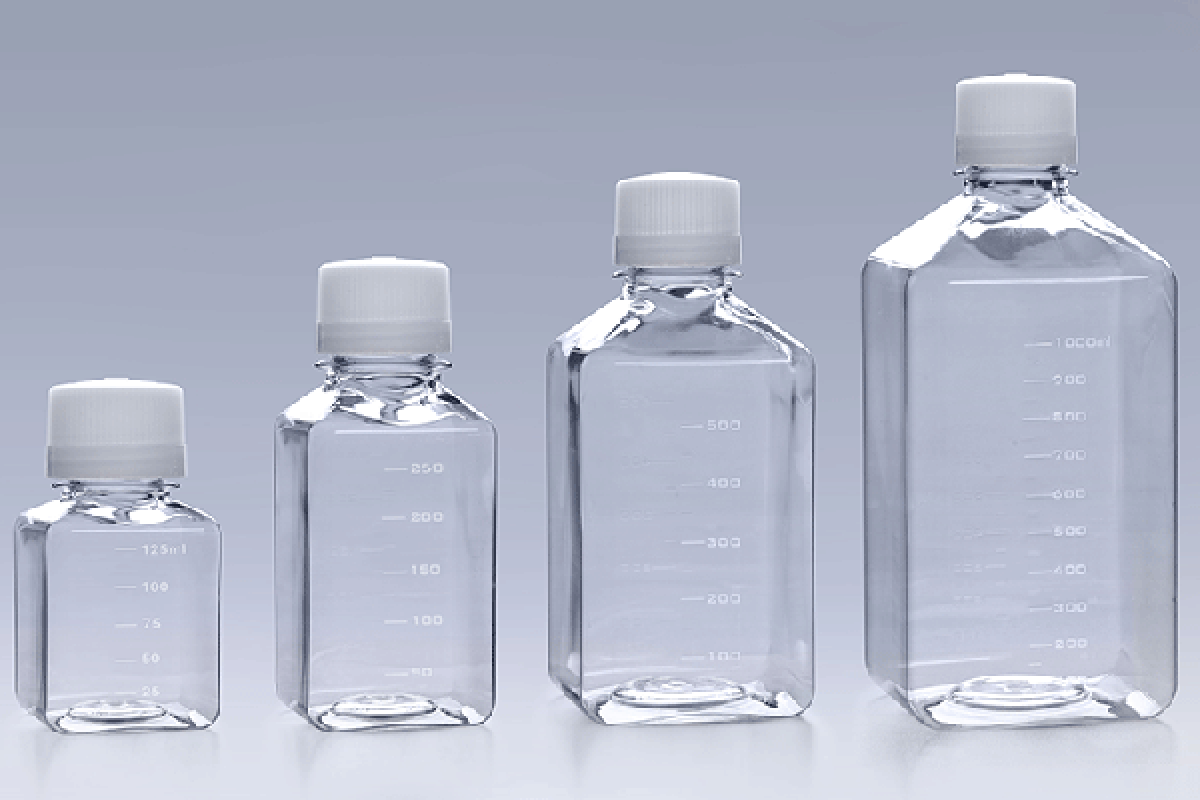
Bottle design also plays a crucial role in the safe handling and storage of pH-sensitive liquids. Square Media Bottlesoffer several practical advantages in biopharma laboratories:
Improved space efficiency in cold rooms and freezers
Enhanced stability during storage and transport
Clear volume graduations for accurate preparation and sampling
Ergonomic handling that reduces operator error
These design benefits make square-format media bottles particularly suitable for high-throughput and GMP-regulated environments.
6. Traceability and GMP Compliance
In GMP biopharma labs, traceability and documentation are essential. Media bottles used for pH-sensitive liquids should be manufactured under controlled quality systems and supported by appropriate documentation.
Key compliance elements include:
Batch traceability and inspection records
Manufacturing under ISO-certified quality management systems
Consistent production quality to support validation activities
These factors simplify audits and help laboratories maintain regulatory confidence.
Conclusion
Proper packaging is a critical factor in preserving the integrity of pH-sensitive liquids in biopharma laboratories. From material compatibility and gas barrier performance to sterility and design efficiency, every aspect of a media bottlecontributes to maintaining stable pH and reliable results.
By selecting well-designed Square Media Bottlesthat align with biopharma and GMP requirements, laboratories can improve storage efficiency, reduce variability, and support consistent, compliant operations.