

News
Kunststoff
Unternehmen
INNOTEQ 2023: Nachhaltige Swissness für die MEM-Industrie


Scaling up adherent cell culture is a critical step in vaccine manufacturing, monoclonal antibody production, and biopharmaceutical development. Among traditional large-scale systems, Roller Bottles and Cell Factories remain two of the most widely used solutions.
Both systems increase available surface area for cell attachment — but they differ fundamentally in culture dynamics, scalability, facility requirements, and process control.
Understanding these differences is essential for selecting the right platform.
1. Core Difference: Dynamic vs Static Culture
The most important distinction lies in how cells interact with the culture environment.
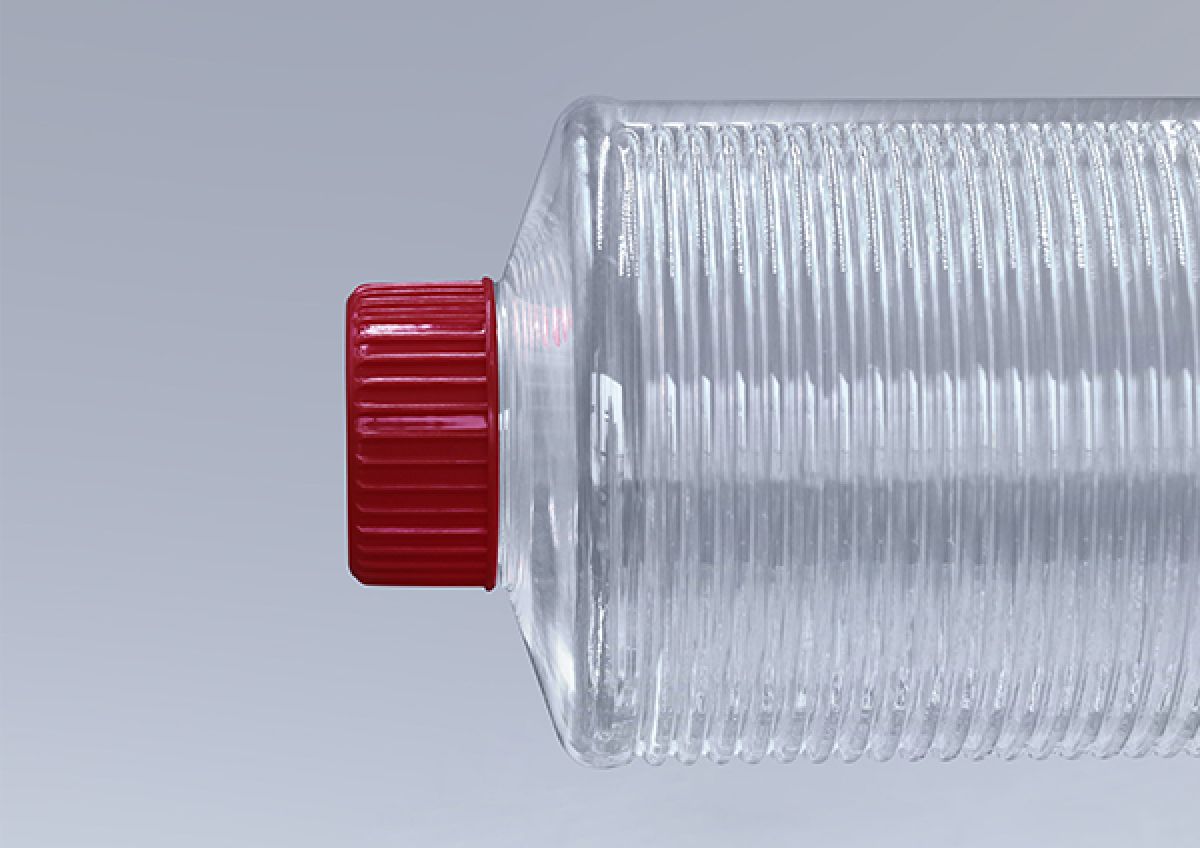
Roller Bottles – Dynamic Culture
Roller bottles rotate slowly on a rolling apparatus, allowing culture medium to continuously flow over the cell layer. This movement:
Improves oxygen transfer
Enhances nutrient distribution
Reduces metabolite accumulation
Supports higher viral productivity in some processes
Because of this dynamic environment, roller bottles are widely used in virus amplification and vaccine production.
Cell Factories – Static Culture
Cell factories are multi-layer, stacked systems that provide large surface areas in a compact footprint. They rely on passive gas exchange and do not involve mechanical motion.
They are commonly used for:
Large-scale cell expansion
Cell therapy manufacturing
Stem cell production
Consistent batch production under GMP conditions
The system is stable, compact, and operationally efficient.
2. Scalability and Space Efficiency
When production volume increases, the scaling strategy differs significantly.
Roller Bottles: Scale linearly by increasing the number of bottles and roller units.
Cell Factories: Scale vertically by increasing the number of layers (10-layer, 40-layer, etc.).
If facility space is limited, cell factories typically provide higher surface area per square meter.
If flexibility is required — such as adjusting batch sizes — roller bottles offer easier incremental scaling.
3. Oxygen Demand and Process Performance
For processes with high oxygen demand, such as viral production using Vero cells, the dynamic rotation of roller bottles often provides better oxygenation and nutrient exchange.
Cell factories rely on diffusion through vented caps and headspace gas exchange. For many cell expansion applications, this is sufficient — but in oxygen-sensitive processes, dynamic systems may offer advantages.
4. Operational Considerations
Factor Roller Bottles Cell Factory
Equipment Required Roller apparatus No motion equipment
Handling Individual units Stacked system
Contamination Risk Isolated per bottle Larger batch per unit
Labor Intensity Higher at large scale More efficient per surface area
For facilities prioritizing automation and reduced manual handling, cell factories are often preferred.
For facilities prioritizing flexibility and process segmentation, roller bottles may be advantageous.
5. Application-Based Recommendation
Roller Bottles are often preferred for:
Viral vaccine production
Pilot-scale biologics manufacturing
Processes requiring enhanced oxygen transfer
Flexible batch production
Cell Factories are often preferred for:
High-density cell expansion
Cell therapy manufacturing
GMP-compliant large batch production
Space-optimized facilities
In practice, many biopharmaceutical manufacturers use both systems at different development stages.
6. Making the Right Choice
The decision between Roller Bottles and Cell Factories should be based on:
Process oxygen requirements
Production scale
Facility layout
Labor availability
GMP strategy
Cost structure
There is no universally superior system — only the system that best fits your process.
Supporting Your Scale-Up Strategy
At Fudau, we manufacture both Cell Culture Roller Bottles and Multi-layer Cell Factories, supporting applications in:
Vaccine production
Monoclonal antibody manufacturing
Recombinant protein production
Large-scale adherent cell expansion
Produced under strict quality management systems, our consumables are designed for consistency, sterility, and reliable performance.
If you are evaluating scale-up solutions, our team is ready to support your process selection.