

News
Kunststoff
Unternehmen
INNOTEQ 2023: Nachhaltige Swissness für die MEM-Industrie


Chinese Hamster Ovary (CHO) cells are the "workhorse" of the biopharmaceutical industry for producing recombinant therapeutic proteins (such as monoclonal antibodies, clotting factors, etc.). Their advantages include the ability to perform proper human-like glycosylation and achieve high-density growth and high expression levels in suspension culture. However, achieving a stable and efficient production process requires careful attention to every step, from cell bank thawing to large-scale production. This guide serves as your ultimate handbook, systematically explaining the key points of the entire CHO cell culture workflow.
Chapter 1: A Solid Foundation – Cell Freezing and Thawing
A successful culture process starts with healthy seed cells. Improper freezing and thawing can severely damage cell viability, creating issues for downstream processes.
Best Freezing Practices:
Cell Status: Freeze cells in the mid-logarithmic growth phase with viability ᢗ%.
Freezing Medium: Use standard formulations (e.g., 90% basal medium + 10% DMSO) or commercial animal component-free freezing media to reduce contamination risk.
Controlled Rate Cooling: Always use a freezing container or a controlled-rate freezer to cool cells slowly at approximately -1°C per minute to -80°C before transferring to liquid nitrogen for long-term storage. Avoid placing cells directly at -80°C, as ice crystals can cause damage.
Effective Thawing Protocol:
Rapid Thaw: Immediately after removing the vial from liquid nitrogen, place it in a 37°C water bath and agitate gently until completely thawed (about 1-2 minutes).
Gentle Transfer: Transfer the cell suspension to a centrifuge tube containing pre-warmed serum-free medium (volume should be at least 10 times that of the freezing medium) to dilute the DMSO.
Gentle Centrifugation: Pellet the cells by low-speed centrifugation (e.g., 100-200g for 5 minutes) and carefully aspirate the supernatant (containing DMSO).
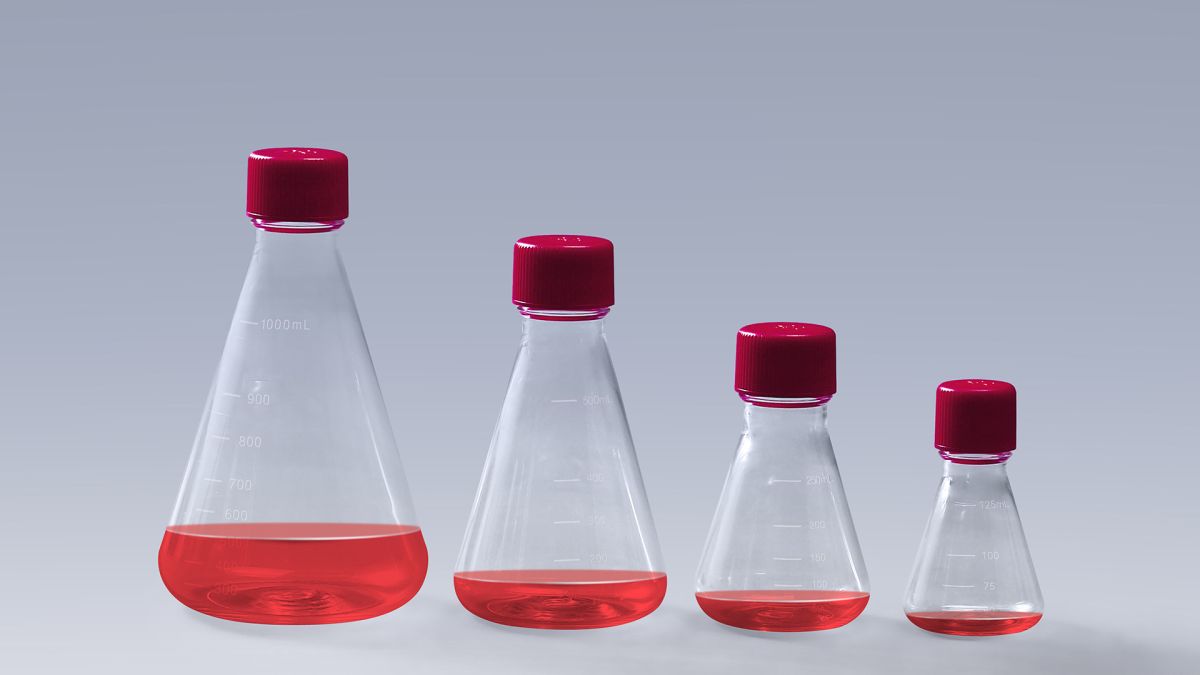
Resuspension and Seeding: Resuspend the cell pellet in fresh, pre-warmed medium. Seed the cells into a multi-layer cell culture flask or shake flask. The recommended initial viable cell density (VCD) is 0.3-0.5 x 10^6 cells/mL.
Chapter 2: From Lab to Production – Expansion and Scale-Up
After obtaining healthy seed cells, sequential expansion is necessary to prepare the inoculum for the bioreactor.
Shake Flask Culture Stage:
Culture Conditions: Use chemically defined media suitable for CHO cells. Culture in an incubator shaker at 37°C, 5-8% CO₂, >80% humidity, and an appropriate agitation speed (e.g., 120-140 rpm).
Regular Monitoring: Sample daily to count cells and monitor cell density and cell viability, plotting a growth curve.
Timely Passaging: Passage the cells when the density enters the late logarithmic phase (e.g., 2-3 x 10^6 cells/mL) and viability remains >90%, maintaining an appropriate seeding density.
Scale-Up to Bioreactor:
When the shake flask culture volume reaches 5-10% of the bioreactor working volume, it's ready for inoculation.
Bioreactor Choice: Start with stirred-tank bioreactors, which allow precise control of key parameters like temperature, dissolved oxygen (DO), pH, and agitation speed.
Inoculation Strategy: Ensure the initial post-inoculation VCD is between 0.5-1.0 x 10^6 cells/mL to facilitate rapid entry into the growth phase.
Chapter 3: Achieving High Density and High Expression – Bioreactor Cultivation Strategies
This is the core phase of the process, aiming to maximize cell density and protein production.
Key Parameter Control:
Dissolved Oxygen (DO): Typically maintained at 30-50%. Low DO inhibits growth; high DO can cause oxidative stress.
pH: The optimal range is usually 7.0-7.2, controlled by sparging CO₂ or adding a base (e.g., Na₂CO₃ solution).
Temperature: Maintained at 37°C during the growth phase. A temperature shift to a lower value (e.g., 33°C) can be applied later to prolong cell lifespan and enhance protein quality.
Agitation Speed: Must balance providing homogeneous mixing with avoiding shear stress damage.
Nutrition and Feeding Strategies:
Basal Medium: Select high-quality, CHO cell-specific media that support high-density growth.
Efficient Feeding: Implement rational feeding strategies to supplement nutrients like glucose, amino acids, and vitamins during the culture, preventing nutrient depletion and excessive accumulation of metabolic by-products (e.g., lactate and ammonium). Feidi Biotechnology offers a range of optimized feed media that can significantly extend culture duration and increase protein titer.
Metabolite Management:
Lactate and ammonium are primary inhibitory metabolites. Optimizing glucose levels (avoiding excess) and using media designed to promote alternative metabolic pathways can shift cells from lactate production to consumption, thereby improving the culture environment.
Chapter 4: Troubleshooting Common Issues and Optimization Tips
Common Problem Potential Causes Suggested Solutions
Slow Cell Growth Suboptimal medium, low seeding density, mycoplasma contamination, poor culture environment Change/optimize medium, ensure correct seeding density, test for mycoplasma, calibrate equipment
Rapid Decline in Viability Nutrient depletion, metabolite accumulation, shear damage, contamination Optimize feeding strategy, monitor metabolites, adjust agitation, test for sterility
Low Protein Expression Unstable cell line, stressful culture conditions, incorrect harvest time Use a high-producing clone, optimize parameters (e.g., temp shift), determine optimal harvest point
Excessive Foaming High protein content, vigorous agitation/aeration Use safe antifoaming agents and optimize aeration strategy
Conclusion
Mastering the complete CHO cell culture process, from thawing to high-density expression, is a systematic endeavor requiring meticulous attention to every detail. Success hinges on every step, from selecting high-quality cell culture consumables (such as the sterile shake flasks and bioreactor accessories offered by Feidi Biotechnology), to optimizing media formulations and process parameters.
FDCELL not only provides a full range of high-performance consumables for CHO cell culture but also possesses deep technical expertise, offering one-stop solutions from process development to scaled-up production.