

News
Kunststoff
Unternehmen
INNOTEQ 2023: Nachhaltige Swissness für die MEM-Industrie


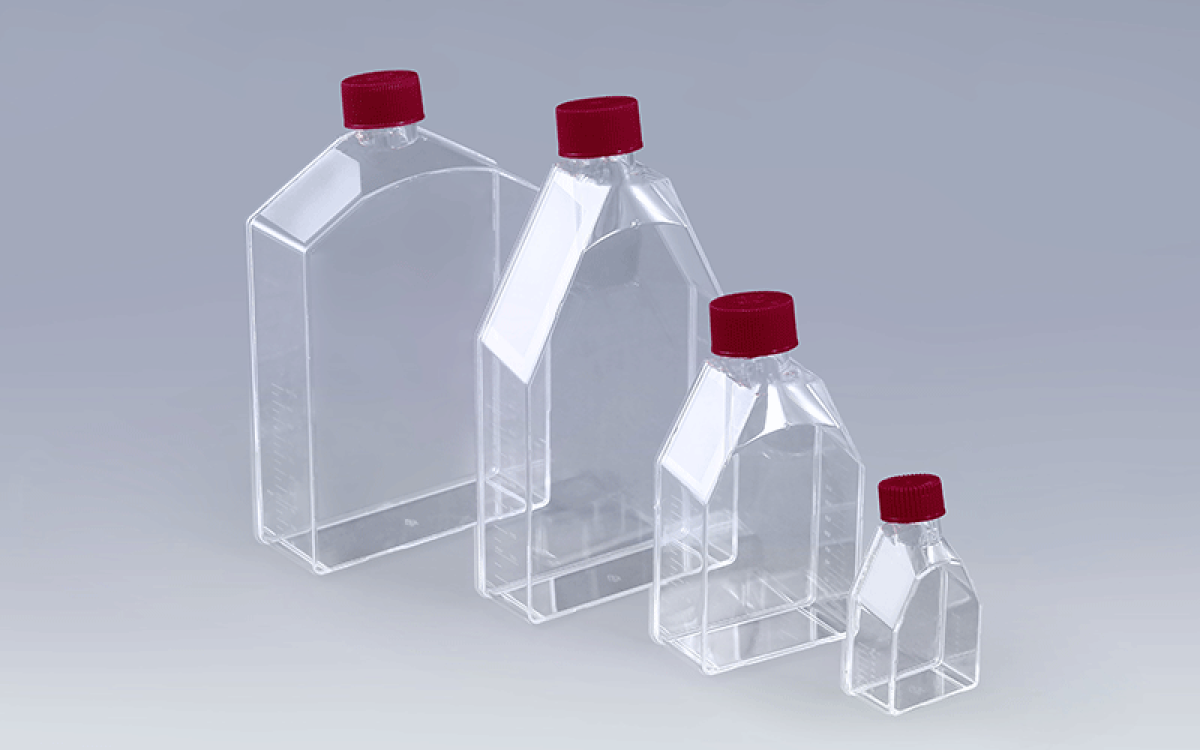
Uneven cell growth is a common challenge in adherent cell culture. Researchers may observe that cells grow densely in some areas of a Cell Culture Flask, while other regions remain sparse or underdeveloped. This inconsistency can lead to unreliable experimental results and reduced reproducibility.
Understanding the factors that contribute to uneven cell distribution in a cell flask is essential for maintaining stable culture conditions and achieving consistent experimental outcomes.
Why Uniform Cell Growth Matters
In adherent cell culture, cells rely on consistent access to nutrients, oxygen, and surface area for attachment and proliferation. When cells grow unevenly inside a Cell Culture Flask, several problems may arise:
Variability in cell density across the growth surface
Differences in metabolic activity within the same culture
Reduced reproducibility in downstream experiments
Uniform cell distribution ensures that the entire growth surface of the cell flask supports healthy and predictable cell expansion.
Uneven Cell Seeding
One of the most common causes of uneven growth in a Cell Culture Flask is improper cell seeding. If the cell suspension is not well mixed before plating, cells may settle unevenly and attach in clusters.
To improve cell distribution in a cell flask:
Mix the cell suspension gently but thoroughly before seeding
Add the suspension slowly along the side wall of the flask
Gently move the flask in a cross pattern to distribute cells evenly
These simple techniques help cells settle uniformly across the surface of the Cell Culture Flask.
Medium Distribution and Liquid Depth
Medium distribution can also influence cell growth patterns. If the medium depth varies across the cell flask, certain areas may receive more nutrients while others experience localized depletion.
Factors that affect medium distribution include:
Flask handling during incubation
Uneven placement inside the incubator
Slight tilting of the Cell Culture Flask after seeding
Ensuring that the flask remains level inside the incubator helps maintain consistent nutrient availability.
Surface Treatment and Attachment Variability
The surface treatment of a Cell Culture Flask plays a critical role in cell attachment. Inconsistent or poorly controlled surface modification can result in areas where cells attach more efficiently than others.
A high-quality cell flask should provide:
Uniform TC-treated surface
Consistent hydrophilicity across the growth area
Reliable cell attachment performance
When surface properties are consistent, cells can spread and proliferate evenly.
Environmental Factors Inside the Incubator
Environmental conditions inside the incubator can also contribute to uneven growth. Variations in temperature, gas exchange, or airflow may influence how cells behave in different regions of a Cell Culture Flask.
For example:
Edge regions may experience slightly higher evaporation
Temperature gradients may affect cell metabolism
Gas exchange may vary depending on flask positioning
Proper incubator organization and stable environmental conditions help minimize these effects.
Handling and Mechanical Disturbance
Frequent or abrupt movement of a cell flask can disrupt the distribution of cells before they fully attach. Even small disturbances during the early stages of culture may lead to uneven cell patterns.
To reduce this risk:
Avoid moving the Cell Culture Flask during the first hours after seeding
Handle flasks gently when transferring between workspaces
Maintain stable placement in the incubator
These precautions help cells establish a uniform monolayer.
Conclusion
Uneven cell growth in a Cell Culture Flask can result from multiple factors, including improper seeding techniques, medium distribution differences, surface treatment variability, and environmental conditions. By carefully controlling these parameters, researchers can promote uniform cell attachment and consistent growth patterns.
Using a well-designed cell flask with reliable surface properties and maintaining standardized culture practices are essential steps toward improving reproducibility and achieving stable experimental results.