

News
Kunststoff
Unternehmen
INNOTEQ 2023: Nachhaltige Swissness für die MEM-Industrie



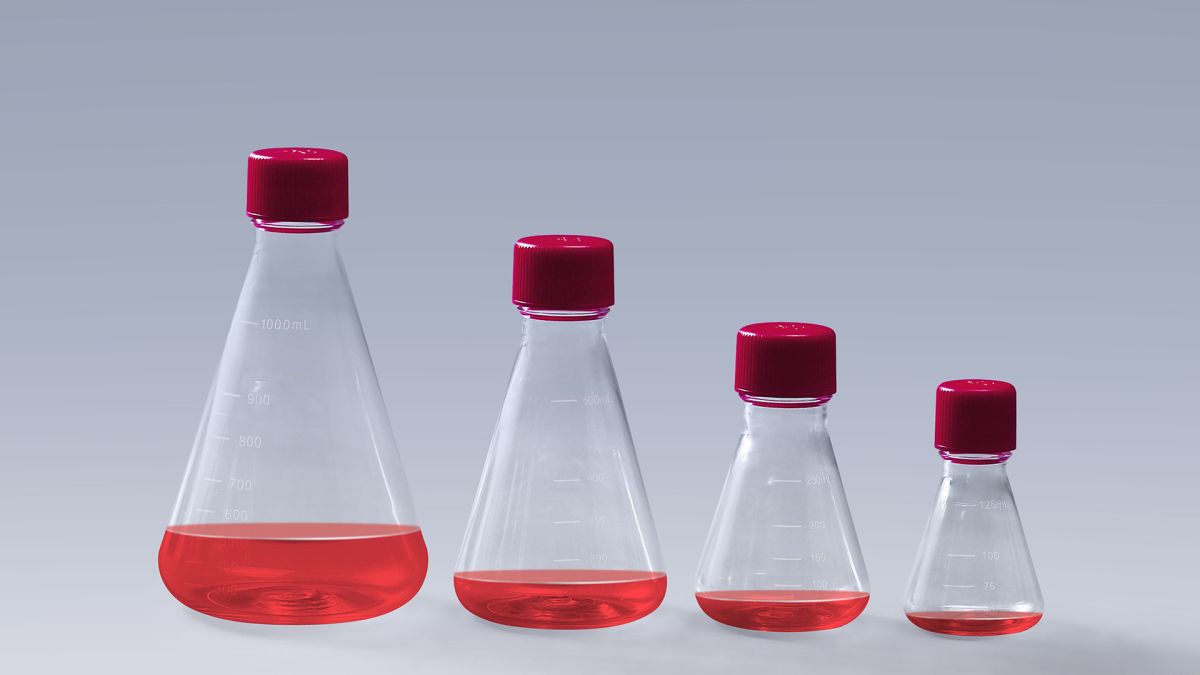
Animal cell expansion is a foundational step in biopharmaceutical research, vaccine development, and cell-based therapy studies. Unlike plant or microbial systems, animal cells are highly sensitive to mechanical stress, surface interactions, and environmental fluctuations. For laboratory-scale suspension culture and early-stage process development, the Erlenmeyer Shake Flask offers a controlled and practical platform for reliable cell expansion.
Process Requirements for Animal Cell Expansion
Animal cells grown in suspension require a delicate balance between mixing efficiency and shear protection. Insufficient agitation can lead to cell settling and nutrient gradients, while excessive shaking may damage cell membranes and reduce viability.
The classic Erlenmeyer Flask, when used on an orbital shaker, creates a predictable flow pattern that supports gentle circulation. This makes Erlenmeyer-based shake flasks well suited for expanding animal cells prior to scale-up into stirred-tank bioreactors.
Importance of PETG/PC Materials in Animal Cell Culture
Material selection plays a critical role in animal cell expansion. Modern Erlenmeyer Shake Flasks manufactured from USP Class VI PETG or PC materials provide several advantages:
Chemically inert surfaces that minimize cell stress and adsorption
High transparency for visual monitoring of cell growth and medium condition
Low extractables and leachables, supporting sensitive cell lines
Strong mechanical performance during continuous shaking
Compared with glass Erlenmeyer flasks, PETG and PC shake flasks improve safety and reduce handling risks in high-throughput laboratory environments.
Design Factors Influencing Culture Performance
Several design features of an Erlenmeyer Shake Flask directly affect animal cell growth:
Optimized conical geometry that maintains cells in suspension with reduced turbulence
Breathable vent caps with hydrophobic membranes to allow sterile gas exchange
Smooth internal surfaces that limit cell attachment and aggregation
Consistent wall thickness to ensure uniform shaking behavior across batches
These features help create stable and reproducible culture conditions during expansion.
Operational Considerations in Daily Use
When using Erlenmeyer Shake Flasks for animal cell expansion, researchers should pay attention to the following practical aspects:
Maintain moderate working volumes to ensure oxygen availability
Adjust shaking speed to minimize shear while preventing sedimentation
Use vented caps for active cultures and sealed caps for media handling
Prefer single-use, pre-sterilized flasks to reduce contamination risk
These considerations help maintain high cell viability and reproducibility across experiments.
Role in Early-Stage Process Development
In many upstream workflows, Erlenmeyer Shake Flasks serve as an essential tool for seed culture preparation and process evaluation. They allow researchers to assess growth behavior, medium performance, and culture stability before committing to larger-scale systems.
For laboratory-scale animal cell expansion, the Erlenmeyer Shake Flask provides a reliable balance between control and simplicity. Combined with PETG or PC materials and thoughtful design, the traditional Erlenmeyer Flask format continues to support reproducible and efficient cell culture workflows in modern life science laboratories.