

News
Kunststoff
Unternehmen
INNOTEQ 2023: Nachhaltige Swissness für die MEM-Industrie



Extracellular vesicles, especially exosomes, have attracted significant attention in regenerative medicine, drug delivery, diagnostics, and advanced therapeutics. With increasing research into MSC-derived exosomes, engineered exosomes, and cell-based delivery systems, the industry is moving from exploratory studies toward more controlled and scalable production models.
However, translating exosome research into reliable manufacturing remains challenging. Unlike traditional recombinant protein production, exosome manufacturing depends heavily on the biological behavior of producer cells. Cell growth conditions, expansion strategies, and culture environments directly influence the quantity and quality of extracellular vesicles collected during downstream processing.
As a result, selecting an appropriate cell culture flask for exosome production is becoming an important consideration during bioprocess development.
Cell Expansion: The Foundation of Consistent Exosome Manufacturing
Before exosome isolation, producer cells must undergo expansion to achieve sufficient biomass.
Common exosome-producing cell sources include:
Mesenchymal stem cells (MSCs)
HEK293 cells
Immune cells
Other adherent mammalian cell lines
For these applications, the cell expansion stage determines:
Available cell numbers for production
Cell viability and metabolic activity
Batch-to-batch consistency
Overall process efficiency
A stable expansion platform helps researchers establish predictable production workflows before moving into larger-scale extracellular vesicle manufacturing.
Therefore, the role of a cell culture flask for exosome production extends beyond simple cell growth. It becomes part of the upstream process development strategy.
Moving Beyond Research Scale: Challenges in Exosome Manufacturing
Many exosome studies begin with small-scale experiments using limited numbers of cells. However, commercial development requires higher production capacity and stronger process control.
During scale-up, manufacturers face several challenges:
Maintaining Cell Growth Consistency
Increasing culture surface area should not compromise cell morphology, attachment, or proliferation characteristics.
Reducing Process Variability
Manual handling of multiple small vessels can introduce operational differences between batches.
Improving Manufacturing Efficiency
Larger culture formats can help reduce labor requirements and simplify upstream workflows.
For this reason, selecting scalable culture vessels during early research stages can support a smoother transition from laboratory studies to future manufacturing processes.
The Role of Cell Culture Flasks in MSC-Derived Exosome Production
MSC-derived exosomes are among the most widely studied extracellular vesicle products. MSCs require carefully controlled expansion conditions because their biological properties may change during extended culture.
A suitable cell culture flask for mesenchymal stem cell exosome production should support:
Uniform cell attachment
Consistent cell spreading
Stable expansion over multiple passages
Reliable performance between batches
Surface quality is particularly important because variations in cell attachment can influence cell state and downstream exosome characteristics.
For researchers developing MSC-based exosome platforms, consistent cell expansion conditions provide a stronger foundation for process optimization.
Selecting Flask Formats According to Development Stage
The appropriate culture format depends on the maturity of the production process.
Early Research and Optimization
Small surface area flasks are commonly used for:
Cell line establishment
Initial culture condition screening
Exosome characterization studies
Process Development
Medium and large surface area flasks support:
Increased cell numbers
Repeated production studies
More representative process evaluation
Pre-Commercial Development
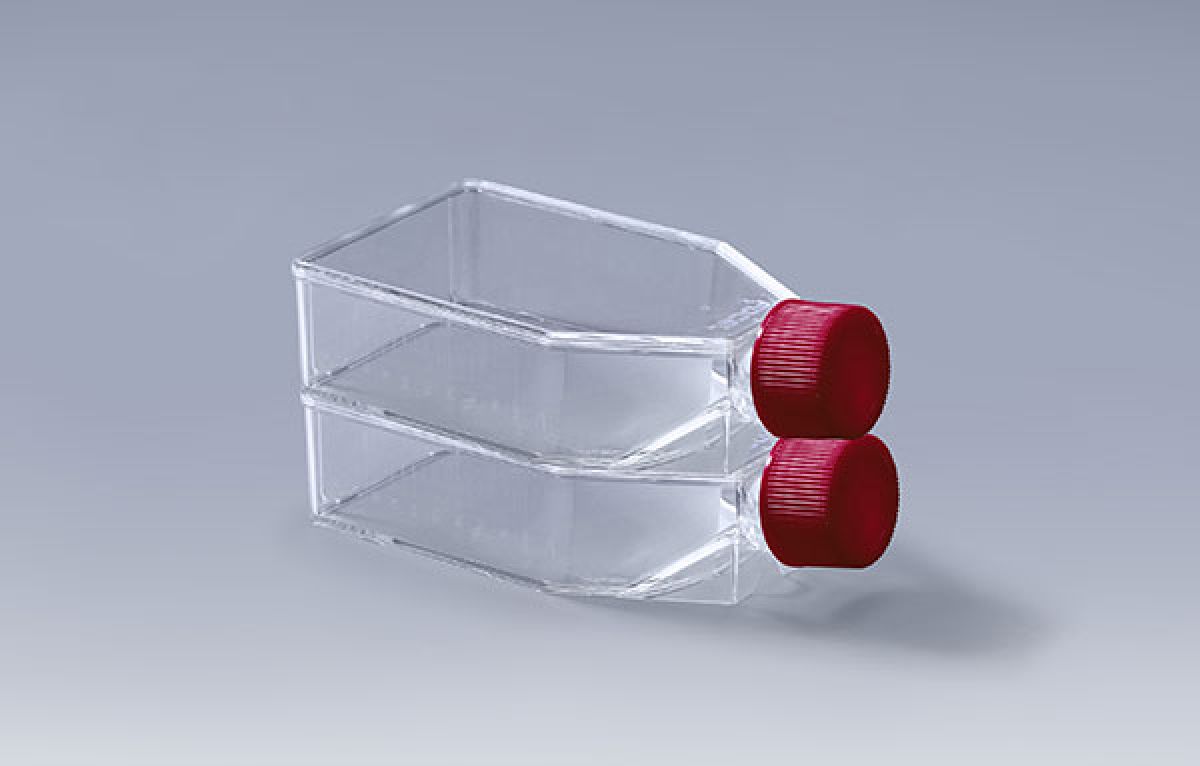
Large-format flasks, such as T175 and T225, provide greater surface area while maintaining a familiar adherent cell culture workflow.
Using multiple flask sizes allows researchers to evaluate scalability while keeping process conditions consistent.
Cell Culture Flask Design Considerations for Extracellular Vesicle Applications
For exosome-related workflows, researchers increasingly evaluate culture vessels based on process requirements rather than only laboratory convenience.
Important considerations include:
Consistent Surface Performance
Uniform treatment across the growth area helps maintain reproducible cell attachment and expansion.
Sterility and Traceability
Exosome research often involves sensitive analytical methods, making contamination control and batch traceability essential.
Compatibility with Scale-Up Strategies
Culture vessels should fit into a broader upstream development pathway, allowing gradual expansion from research to larger production systems.
Building a More Scalable Future for Exosome Manufacturing
The future development of exosome therapeutics will require manufacturing platforms that combine biological performance with process scalability.
While advanced bioreactors and closed manufacturing systems are being developed, cell culture flasks remain an important tool during:
Cell banking
Process optimization
Early-stage production development
Analytical studies
A well-designed cell culture flask for exosome production provides researchers with a reliable starting point for developing scalable extracellular vesicle manufacturing processes.
Conclusion
Exosome production is evolving from laboratory research toward more standardized and scalable manufacturing approaches. During this transition, the cell expansion stage plays a critical role in determining process consistency and productivity.
Selecting the right cell culture flask for exosome production requires consideration of cell type, expansion requirements, scalability, and manufacturing consistency.
With multiple formats including T75, T175, and T225 cell culture flasks, FDCELL supports researchers and biopharmaceutical companies developing cell-based production workflows, including extracellular vesicle and exosome applications.