
News
Kunststoff
Medien
Coperion: Ausbau der Partnerschaft mit Brückner


Media bottles are widely used for storing cell culture media, buffers, serum, reagents, and other laboratory solutions. While factors such as sterility, transparency, and leak-proof performance are important, chemical compatibility is often overlooked.
Chemical compatibility refers to a material's ability to maintain its physical and chemical properties when exposed to specific substances. Poor compatibility can lead to discoloration, cracking, deformation, or even contamination of stored liquids. For biopharmaceutical manufacturing and laboratory applications, selecting the right PETG Media Bottles or PET Media Bottles helps ensure sample integrity and process reliability.
PET and PETG: Similar but Not Identical
Both PET and PETG belong to the polyester family and offer excellent clarity, lightweight construction, and resistance to breakage compared with glass containers.
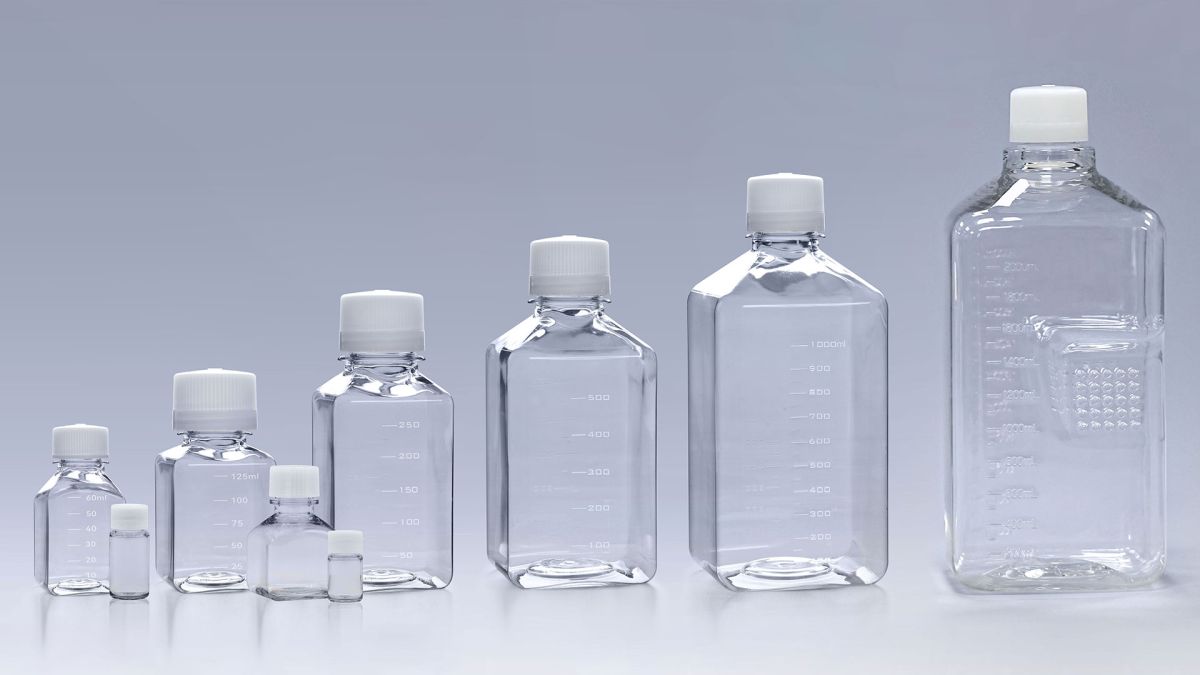
PET Media Bottles are commonly used for general laboratory storage because they provide good strength and cost efficiency. PETG Media Bottles are manufactured using glycol-modified PET resin, resulting in improved impact resistance and enhanced flexibility. These characteristics make PETG a preferred material for many cell culture and biopharmaceutical applications.
Compatibility with Cell Culture Media and Buffers
For most laboratory applications, both PET and PETG perform exceptionally well when storing aqueous solutions.
Cell culture media, PBS buffer, saline solutions, serum supplements, and protein-containing formulations can typically be stored safely in PETG Media Bottles without affecting bottle performance. This is one reason why PETG bottles are widely used as cell culture media bottles in research laboratories, vaccine facilities, and biologics manufacturing plants.
For routine storage of water-based solutions, both materials provide excellent compatibility and long-term stability.
Performance with Alcohols, Acids, and Bases
PET and PETG generally show good resistance to low-concentration alcohol solutions and diluted acids commonly used in laboratory environments.
PETG typically offers slightly better performance when exposed to mild acidic or alkaline solutions, making it suitable for a broader range of laboratory procedures. However, neither PET nor PETG is intended for long-term storage of highly concentrated acids or strong alkaline chemicals. In such cases, alternative materials with higher chemical resistance should be considered.
Limitations with Organic Solvents
Although PET and PETG are compatible with many biological and aqueous solutions, they are not ideal for aggressive organic solvents.
Ketones, aromatic hydrocarbons, and chlorinated solvents may cause stress cracking, swelling, or material degradation over time. Laboratories handling these chemicals should verify compatibility before use and select specialized containers when necessary.
Understanding these limitations helps extend the service life of laboratory media bottles and protects valuable samples from contamination.
Why PETG Media Bottles Are Popular in Biopharmaceutical Applications
In biopharmaceutical production, media bottles are frequently used for media preparation, buffer storage, liquid transfer, and sample collection. PETG Media Bottles offer a combination of high transparency, excellent toughness, and reliable chemical compatibility, making them particularly suitable for these applications.
Many manufacturers also prefer square media bottles made from PETG because they maximize storage efficiency in refrigerators, freezers, and cleanrooms while maintaining the same chemical performance.
Choosing the Right Media Bottle
The choice between PET and PETG depends largely on the intended application. For general laboratory storage, PET Media Bottles provide an economical and dependable solution. For cell culture, biologics manufacturing, vaccine production, and applications requiring greater durability, PETG Media Bottles often provide additional advantages.
By understanding the chemical compatibility of each material, laboratories and biopharmaceutical companies can select the most appropriate media bottle for their workflow, ensuring both product safety and operational efficiency.