

News
Kunststoff
Unternehmen
INNOTEQ 2023: Nachhaltige Swissness für die MEM-Industrie



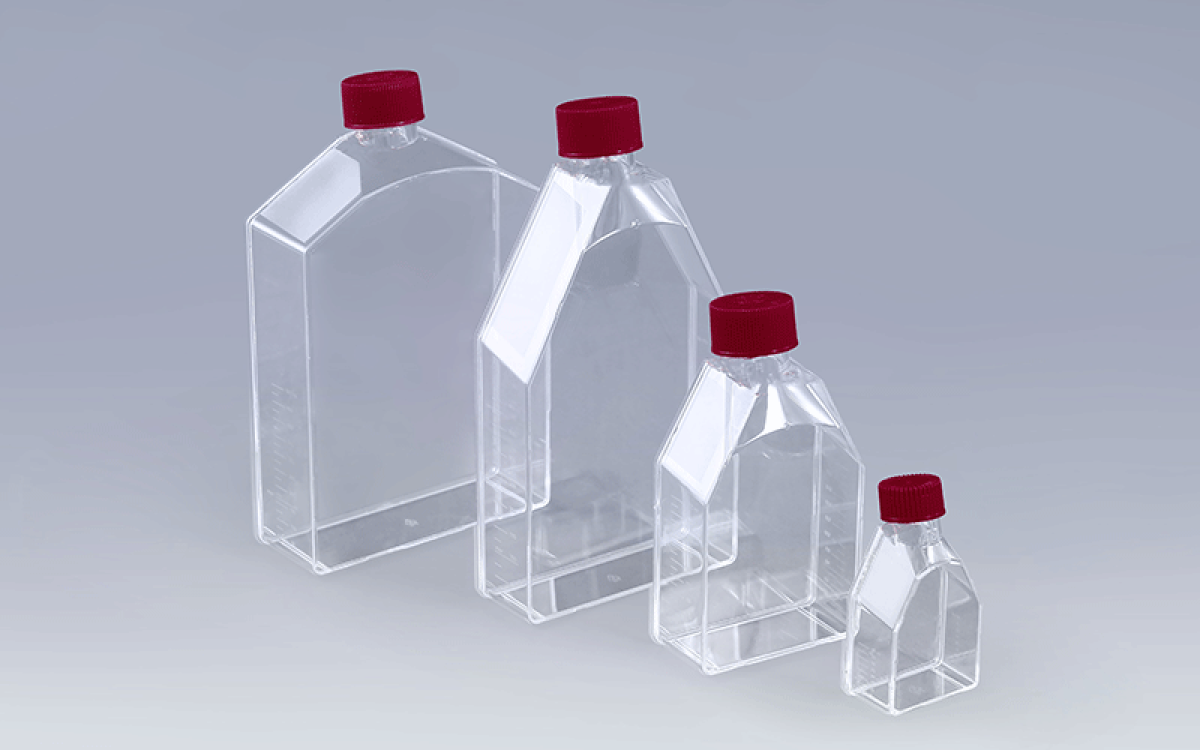
Reproducibility is a fundamental requirement in cell culture research, biopharmaceutical development, and quality-controlled manufacturing workflows. While researchers often focus on cell lines, media composition, and incubation parameters, the role of consumables—especially the cell culture flask—is sometimes underestimated.
In reality, variations in cell flask performance can significantly affect experimental consistency. Understanding the most common issues associated with cell culture flask helps researchers minimize variability and improve reliability across experiments.
1. Inconsistent Surface Treatment
Surface treatment is one of the most critical factors influencing adherent cell growth. Most cell culture flask designed for adherent cells undergo tissue culture (TC) surface treatment to enhance cell attachment. However, the uniformity and stability of this treatment can vary between manufacturers and production batches.
If surface treatment is inconsistent, researchers may observe:
Uneven cell attachment across the growth surface
Variations in cell spreading and morphology
Delayed proliferation during early culture stages
Even minor inconsistencies in a cell flask surface can lead to measurable differences in cell density and experimental outcomes, particularly in sensitive assays or transfection workflows.
2. Variations in Growth Surface Area Accuracy
Many experimental protocols rely on precise calculations of seeding density and medium volume based on flask surface area. When the actual growth area of a cell culture flask deviates from the stated specification, reproducibility can be compromised.
Potential consequences include:
Incorrect cell seeding density
Irregular nutrient distribution
Altered growth kinetics
Accurate dimensional control during manufacturing ensures that each cell flask provides predictable growth conditions and supports standardized experimental design.
3. Material Quality and Optical Clarity Differences
Polystyrene is widely used in the production of cell culture flasks due to its transparency and compatibility with microscopy. However, differences in raw material grade and molding processes can affect surface smoothness, structural stability, and optical clarity.
Lower-quality materials may introduce:
Microscopic surface irregularities
Reduced visibility during cell observation
Increased risk of physical deformation during handling
High-quality cell culture flask manufacturing emphasizes material consistency to support reliable microscopic analysis and maintain stable culture environments.
4. Gas Exchange and Flask Design Limitations
Flask geometry and cap design play a major role in maintaining appropriate gas exchange during cell culture. Variations in neck design, vented cap performance, or internal flask structure may influence oxygen and carbon dioxide diffusion.
Poor gas exchange can result in:
pH fluctuations in culture media
Reduced cell viability
Slower growth rates in dense cultures
Selecting a cell flask designed for efficient gas exchange helps maintain stable culture conditions, especially during long-term or high-density cell growth.
5. Sterility Assurance and Contamination Risks
Sterility is a fundamental requirement for all cell culture consumables, but the robustness of sterilization validation and quality control processes can vary among suppliers.
Common risks associated with inadequate sterility control include:
Microbial contamination
Increased experimental failure rates
Loss of valuable cell lines or samples
Reliable cell culture flasks are typically supported by validated sterilization processes, comprehensive batch testing, and full traceability documentation.
6. Batch-to-Batch Variability
Even when individual flasks perform well, differences between production batches can introduce long-term experimental inconsistencies. Batch variability may originate from changes in raw materials, surface treatment processes, or manufacturing conditions.
For laboratories conducting multi-phase studies or process development, consistent performance across cell culture flask batches is essential for maintaining data continuity and reducing repeat validation work.
7. Handling and Ergonomic Design Differences
Although often overlooked, ergonomic design features such as grip areas, stacking stability, and cap usability can influence laboratory workflow efficiency and contamination control. Poorly designed cell flasks may increase handling errors or introduce accidental contamination risks during routine culture procedures.
Well-designed cell culture flasks support safer handling and improve operational consistency in high-throughput laboratory environments.
Conclusion
Reproducibility in cell culture experiments depends on more than biological variables alone. The quality, design, and manufacturing consistency of the cell culture flask play a significant role in ensuring stable experimental performance.
By recognizing common issues such as surface treatment variability, dimensional inaccuracies, material inconsistencies, gas exchange limitations, sterility assurance, and batch reproducibility, researchers can make more informed choices when selecting cell flasks. Reliable consumables help reduce experimental variability, improve data confidence, and support efficient workflow development across research and biopharmaceutical applications.