

News
Kunststoff
Unternehmen
INNOTEQ 2023: Nachhaltige Swissness für die MEM-Industrie


In modern biopharmaceutical production, cell lines are the “factories” that power the creation of vaccines, monoclonal antibodies, and recombinant proteins.
Among the numerous cell types used for biomanufacturing, CHO (Chinese Hamster Ovary) and HEK293 (Human Embryonic Kidney 293) cells stand out as the most widely adopted mammalian expression systems.
However, as product types diversify and regulatory requirements tighten, the cultivation needs of these cell lines have evolved significantly — from culture conditions to vessel design and process scalability.
I. CHO Cells: The Longtime Workhorse of Biopharmaceuticals
Since the 1980s, CHO cells have been the gold standard for producing recombinant therapeutic proteins and monoclonal antibodies.
Their advantages include:
High productivity and adaptability to serum-free media;
Strong genetic stability and scalability;
Regulatory acceptance and long safety record.
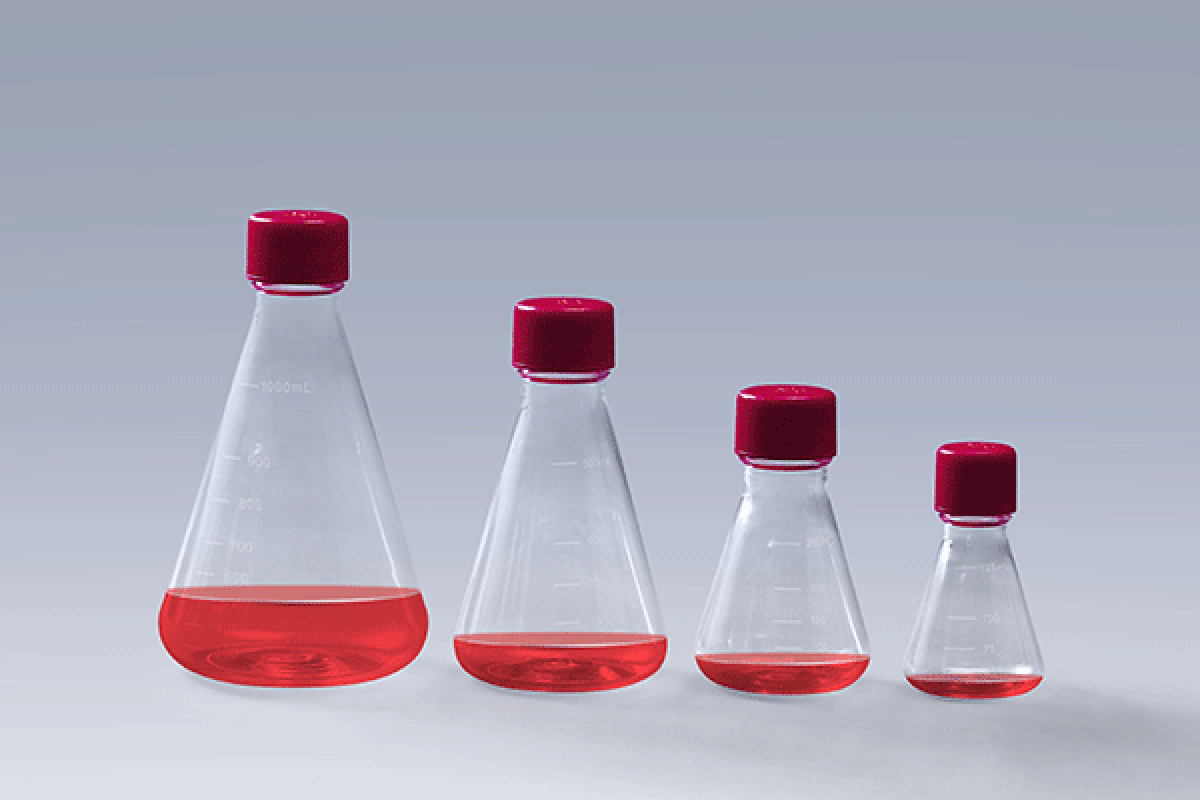
CHO cells grow as suspension cultures in most modern production lines, but early-stage development and clone selection still rely on adherent cultures using cell culture flasks or multi-layer cell factories.
In early research phases, uniform surface treatment and gas exchange in flasks are essential for maintaining stable growth before suspension adaptation.
II. HEK293 Cells: Rising Star for Viral and Complex Protein Production
Unlike CHO, HEK293 cells are human-derived and provide more human-like post-translational modifications.
They are widely used for:
Viral vector production (adenovirus, lentivirus, AAV);
Vaccine development;
Expression of complex membrane or glycoproteins.
HEK293 cells can be cultured as adherent or suspension types, depending on application needs.
However, their oxygen sensitivity and nutrient consumption require more precise environmental control compared with CHO cells.
For adherent HEK293 cultures, consistent gas exchange and low shear stress are critical — multilayer cell factory systems with stable CO₂ permeability provide an ideal solution.
III. Key Differences in Culture Requirements
| Parameter | CHO Cells | HEK293 Cells |
| -------------------- | ------------------------------------------- | ------------------------------------------ |
| Growth Type | Mostly suspension (some adherent) | Adherent or suspension |
| Oxygen Demand | Moderate | Higher, more sensitive |
| Shear Tolerance | High | Lower |
| Medium Preference | Chemically defined, serum-free | Often requires optimized supplements |
| Primary Applications | Monoclonal antibodies, recombinant proteins | Viral vectors, vaccines, membrane proteins |
The shift from CHO to HEK293 reflects not just a change in cell line, but in the entire culture philosophy — from robustness and yield toward precision and biological relevance.
IV. Impact on Cell Culture Systems and Consumables
The evolution of cell lines directly influences how culture systems are designed:
1. Gas Exchange Optimization
HEK293 cells benefit from high-efficiency gas-permeable systems, ensuring oxygen delivery without excessive agitation.
2. Surface Treatment Technology
For adherent systems, uniform hydrophilic surface modification supports consistent cell attachment and morphology.
3. Scalability and Closed Systems
Both CHO and HEK293 production benefit from closed multilayer cell factory systems — allowing contamination-free operation and easy integration with automated liquid handling for GMP environments.
> Example: A biopharma company transitioning from small-scale HEK293 flasks to closed 40-layer cell factories achieved a 25% increase in virus yield and eliminated manual contamination events.
V. The Future: Toward Integrated and Flexible Culture Platforms
As bioprocessing continues to evolve, manufacturers demand versatile culture systems that can support both adherent and suspension modes, adapting to multiple cell types within the same facility.
Next-generation platforms combine:
Advanced surface coatings for specific cell adhesion properties;
Automated feeding and monitoring for real-time environmental control;
Modular scalability — from R&D flasks to industrial cell factories.
This flexibility ensures a smoother transition from discovery to production, regardless of cell line type.
VI. Conclusion
From CHO to HEK293, the evolution of cell lines mirrors the growth of the biopharmaceuticalindustry-toward higher precision, safety, and efficiency.High-quality cell culture consumables-from flasks to multilayer cell factories - are thefoundation enabling this transformation.
By refining every detail of cell culture systems, we ensure that innovation in the lab can translateinto success in large-scale production.