

News
Kunststoff
Medien
Coperion: Ausbau der Partnerschaft mit Brückner


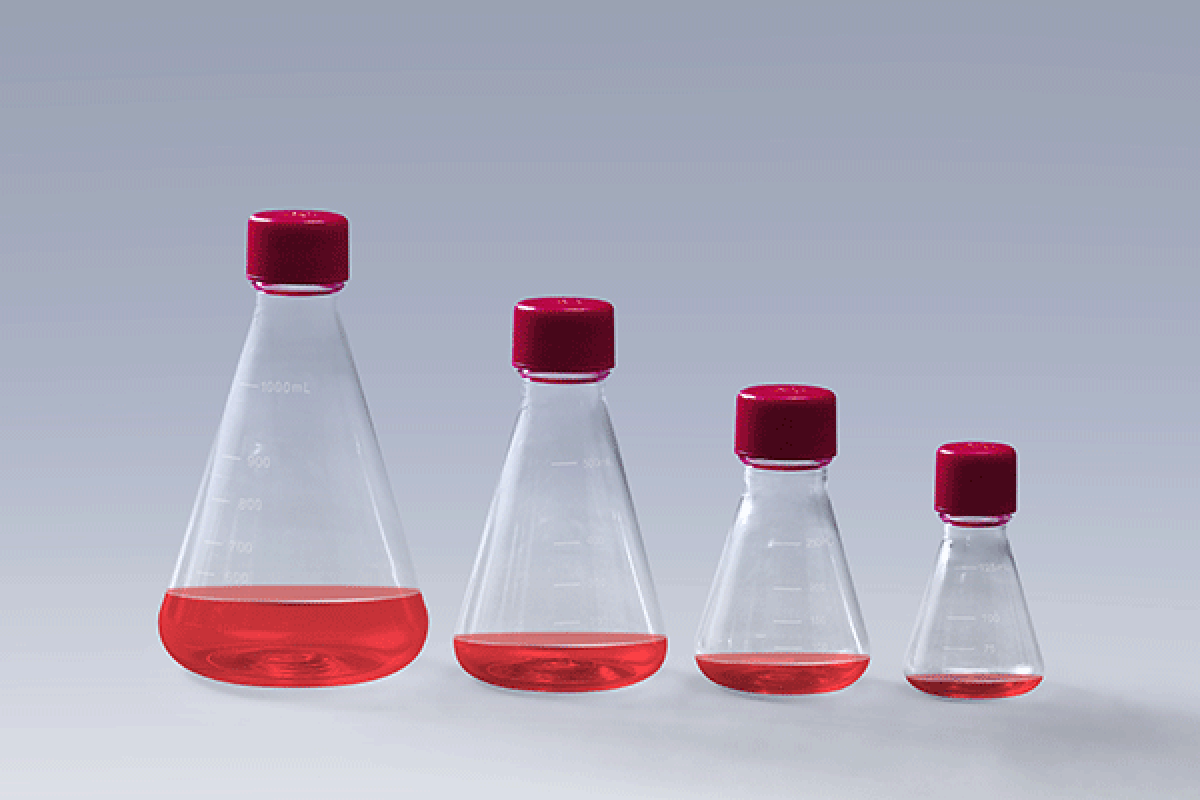
In bioprocess development, a stable and well-designed seed train is essential for successful scale-up. Before cells enter stirred-tank bioreactors, Erlenmeyer Shake Flasks play a critical role in early-stage expansion, adaptation, and process validation.
Although simple in appearance, the Erlenmeyer Flask is a foundational tool that directly influences inoculum quality, growth consistency, and downstream bioreactor performance.
The Role of Shake Flasks in the Seed Train
A typical seed train progresses from small-volume cultures to increasingly larger systems before inoculation into a production bioreactor. In this workflow, Erlenmeyer Shake Flasks are commonly used for:
Expanding cells from cryovials or agar plates
Adapting cells to suspension culture
Optimizing media and feeding strategies
Producing a healthy, uniform inoculum
Shake flasks serve as the bridge between static culture systems and dynamic bioreactor environments. Poor control at this stage can lead to variability that amplifies during scale-up.
Why Erlenmeyer Flasks Are Ideal for Early Expansion
The classic conical design of the Erlenmeyer Flask supports efficient mixing and gas exchange during orbital shaking. When used correctly, shake flasks provide:
Adequate oxygen transfer for low- to mid-density cultures
Homogeneous nutrient distribution
Reduced shear stress compared to impeller-driven systems
For bacteria, yeast, plant cells, and animal cells in suspension, Erlenmeyer Shake Flasks allow rapid biomass accumulation while maintaining cell viability and productivity.
Key Parameters That Affect Seed Quality
Even at the shake flask stage, process parameters matter. Common factors that influence seed train performance include:
Working volume: Overfilling reduces oxygen transfer and mixing efficiency
Shaking speed and orbit: Directly impacts mass transfer and shear
Flask material: PETG or PC flasks offer lightweight handling and break resistance compared to glass
Cap selection: Vent caps support gas exchange, while seal caps are used for short-term storage or transport
Controlling these variables helps ensure that cells enter the bioreactor in an optimal physiological state.
Transitioning from Shake Flask to Bioreactor
One of the main objectives of the shake flask stage is to prepare cells for the hydrodynamic and metabolic conditions of a bioreactor. While Erlenmeyer Shake Flasks cannot fully replicate bioreactor environments, they allow gradual adaptation by:
Increasing culture volume stepwise
Adjusting media composition and osmolality
Monitoring growth kinetics before scale-up
A consistent and reproducible shake flask process reduces lag phase, shortens bioreactor startup time, and improves batch-to-batch consistency.
Single-Use Erlenmeyer Shake Flasks in Modern Bioprocessing
With the growing adoption of single-use technologies, disposable Erlenmeyer Shake Flasks made from PETG or PC are increasingly used in seed train development. Compared to traditional glass flasks, they offer:
Elimination of cleaning and sterilization steps
Reduced contamination risk
Improved consistency between batches
Easier handling in GMP and pilot-scale environments
These advantages make single-use shake flasks particularly suitable for regulated biopharmaceutical and vaccine production.
Conclusion
From initial cell recovery to bioreactor inoculation, Erlenmeyer Shake Flasks play a pivotal role in seed train development. Their proper selection and use directly impact inoculum quality, scale-up efficiency, and overall process robustness.
By understanding the function of the Erlenmeyer Flask within the seed train, bioprocess teams can build a more reliable foundation for successful upstream production.