
News
Kunststoff
Unternehmen
INNOTEQ 2023: Nachhaltige Swissness für die MEM-Industrie


HeLa Cell Growth Behavior in Cell Culture Flask
HeLa cells, derived from human cervical cancer, are one of the most widely used cell lines in biomedical research due to their robust growth and adaptability. Understanding HeLa cell growth behavior in a cell culture flask is essential for achieving consistent experimental results and optimizing cell culture conditions.
Characteristics of HeLa Cell Growth
HeLa cells are adherent cells, meaning they require a surface to attach to for growth. In a standard cell culture flask, they exhibit the following behaviors:
Rapid proliferation: HeLa cells have a short doubling time (typically 20–24 hours under optimal conditions).
Strong attachment: They adhere well to treated surfaces, especially TC-treated cell culture flasks, which enhance cell adhesion.
High tolerance: HeLa cells can tolerate a range of culture conditions, making them suitable for routine laboratory use.
Growth Phases in a Cell Culture Flask
When cultured in a cell culture flask, HeLa cells follow a typical growth curve:
Lag Phase
After seeding, cells adapt to the new environment and attach to the flask surface. During this phase, there is little to no cell division.
Log (Exponential) Phase
Cells begin to divide rapidly. This is the optimal phase for experiments, as cells are most metabolically active and uniform.
Stationary Phase
As cells reach confluence (typically 80–100%), growth slows due to limited space and nutrients.
Decline Phase
If not subcultured, cells may detach or die due to nutrient depletion and waste accumulation.
Key Factors Affecting HeLa Cell Growth in Cell Culture Flasks
1. Surface Treatment of the Flask
Using TC-treated cell culture flasks is critical for HeLa cells, as it improves cell attachment and spreading. Poor surface quality can lead to uneven growth or cell detachment.
2. Culture Medium
HeLa cells are commonly cultured in media such as DMEM supplemented with fetal bovine serum (FBS). Proper nutrient composition supports optimal growth and viability.
3. Seeding Density
Low density may prolong the lag phase
High density may lead to early confluence and nutrient depletion
Maintaining an appropriate seeding density ensures consistent growth kinetics.
4. Incubation Conditions
Standard conditions include:
Temperature: 37°C
CO₂: 5%
Humidity: ~95%
Stable conditions are essential for reproducible results.
5. Subculturing Practices
HeLa cells should be passaged before reaching full confluence (typically at 70–80%). Overgrowth can alter cell morphology and affect experimental outcomes.
Advantages of Using High-Quality Cell Culture Flasks
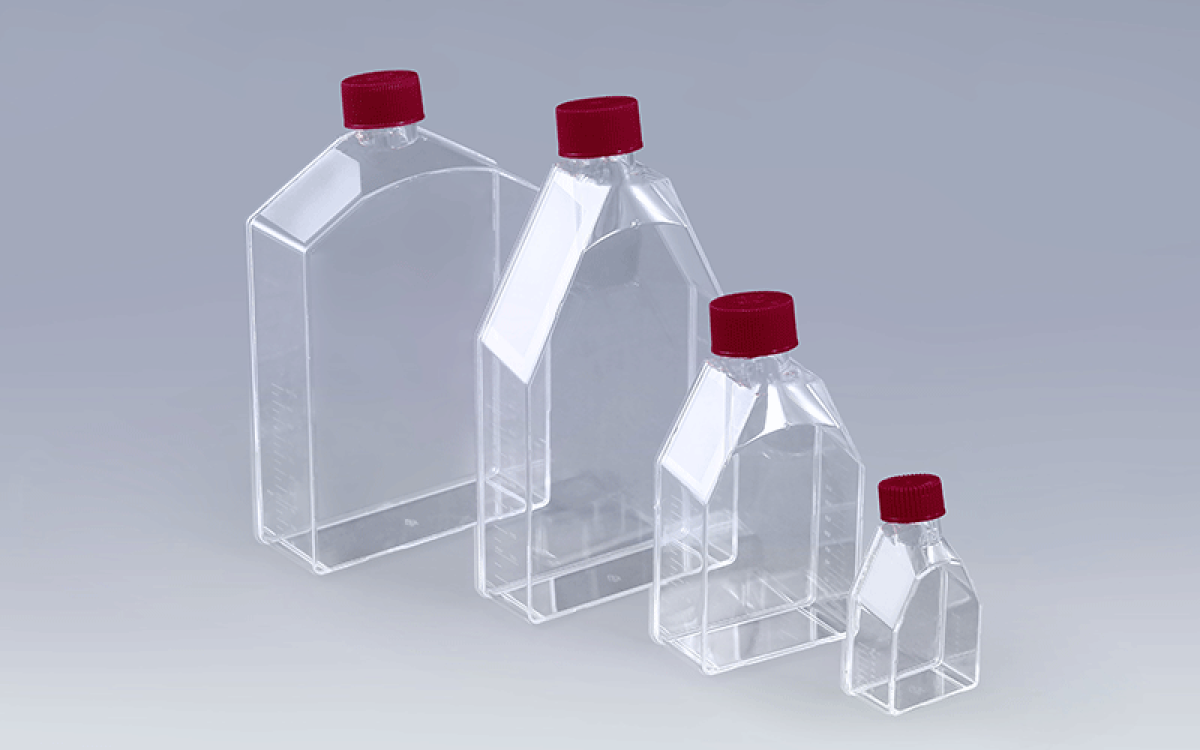
The performance of HeLa cells is closely linked to the quality of the cell culture flask used. High-quality flasks offer:
Consistent surface treatment for reliable cell attachment
High optical clarity for easy microscopic observation
Sterility and low endotoxin levels
Uniform growth conditions across batches
These factors are especially important for biopharma and research applications requiring reproducibility.
Common Issues and Troubleshooting
Poor attachment: Check if the flask is TC-treated and ensure proper serum concentration
Slow growth: Verify medium quality and incubation conditions
Contamination: Use sterile techniques and high-quality consumables
Cell detachment: Avoid over-confluence and mechanical disturbance
Conclusion
HeLa cell growth behavior in a cell culture flask is influenced by multiple factors, including surface treatment, medium composition, and culture conditions. By optimizing these parameters and using high-quality cell culture flasks, researchers can achieve consistent, reproducible results. This makes HeLa cells an ideal model for a wide range of applications in cell biology, drug development, and biotechnology.