
News
Kunststoff
Unternehmen
INNOTEQ 2023: Nachhaltige Swissness für die MEM-Industrie


Mastering HEK293 Cell Culture: A Beginner's Guide to Avoiding Common Pitfalls
HEK293 cells (human embryonic kidney 293 cells), a commonly used cell line in biomedical research and biopharmaceuticals, are moderately difficult to culture. They are not considered "highly challenging cells," but successfully growing them requires an understanding of their growth characteristics and attention to key operational details. Otherwise, issues like poor cell health, contamination, or growth arrest can easily occur. The following analysis breaks down HEK293 culture into three aspects—"Growth Characteristics," "Key Challenges," and "Optimization Strategies"—to help you efficiently master the process:
1. First, Understand the "Personality" of HEK293 Cells: Mastering Their Traits is the Foundation of Success
The core characteristics of HEK293 cells determine their culture requirements. Understanding these is essential for "tailoring the approach":
Dual Adaptability (Adherent/Suspension):
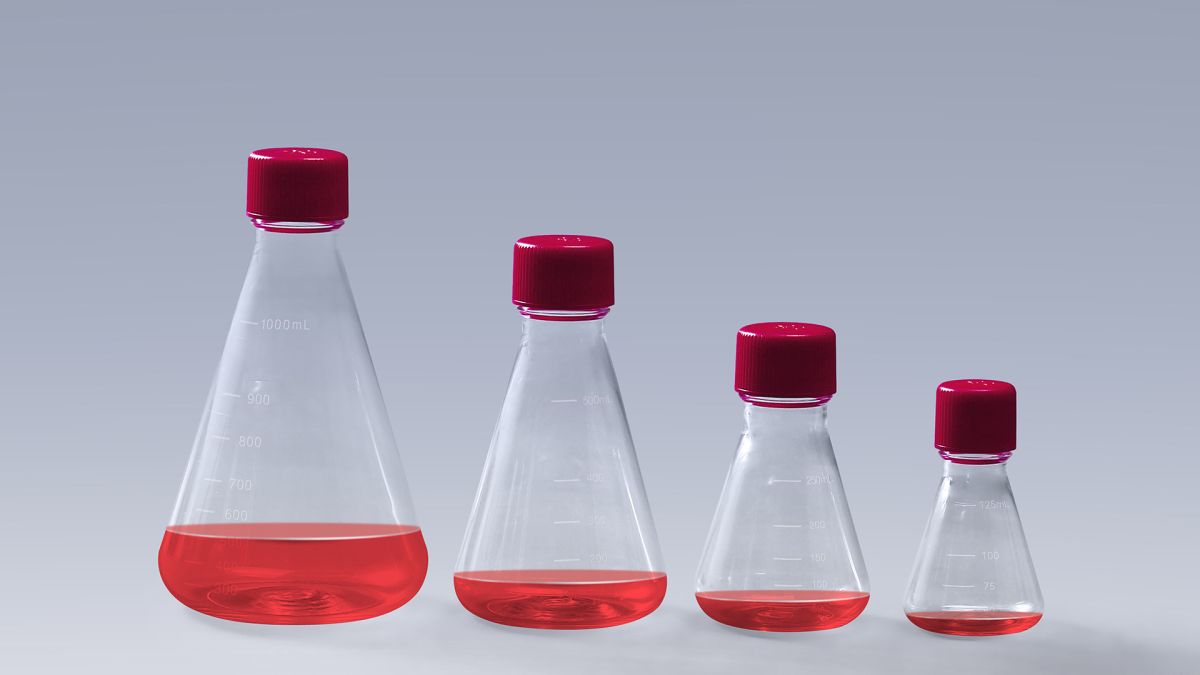
Conventional HEK293 cells grow adherently and require a attachment-friendly environment, such as tissue culture (TC)-treated flasks. Adapted subtypes like HEK293T or 293F can be grown in suspension (compatible with Erlenmeyer Shake Flasks or bioreactors), making them more suitable for large-scale protein expression. However, suspension culture is more sensitive to medium composition and agitation conditions.
High Nutritional Demand:
Basic media (e.g., DMEM) alone is insufficient. Supplementation with 10%-15% fetal bovine serum (FBS; choose lots with low endotoxin) is required. Alternatively, use serum-free or chemically defined media (e.g., FreeStyle™ 293 Medium). Suspension cultures, in particular, often require additional supplements like insulin and transferrin to prevent cell clumping and viability loss.
Fast Growth but Prone to "Aging":
Doubling time for adherent HEK293 is approximately 24-36 hours. Passage density should be controlled at 30%-50% confluency (exceeding 80% confluency can lead to contact inhibition, causing cells to flatten and proliferate slower). Suspension HEK293 density should be maintained between 1×10⁵ and 3×10⁶ cells/mL; density that is too low can induce apoptosis, while density that is too high leads to nutrient depletion.
2. The 3 Common "Pitfalls" in HEK293 Culture: Avoiding These Means 80% Success
Many find HEK293 difficult to culture, often due to these detailed missteps:
Difficulty in Contamination Control: High Sensitivity to Microbial Contamination
The nutrient-rich environment of HEK293 cultures means they can rapidly collapse if contaminated with bacteria, fungi, or mycoplasma (e.g., bacterial contamination can turn medium cloudy within 12 hours).
Misconception: Relying solely on biosafety cabinet techniques while overlooking the sterility of consumables (e.g., improperly sterilized flasks or pipettes) or contaminated serum batches (failing mycoplasma testing).
Key Solution: All consumables should meet USP Class VI standards (e.g., sterile, nuclease-free cell culture flasks). Serum should be verified for mycoplasma (e.g., via PCR testing) prior to use. Regularly disinfect incubators and biosafety cabinets (e.g., UV light and 75% ethanol wiping).
Adherent Cells Detach or Suspension Cells Aggregate
Adherent HEK293: Using overly concentrated trypsin (e.g., undiluted 0.25% trypsin) or prolonged digestion (exceeding 5 minutes) damages surface proteins, impairing subsequent attachment and leading to "detachment and floating."
Suspension HEK293: Insufficient agitation speed (e.g., Erlenmeyer Shake Flask rpm < 100) or inadequate serum concentration can cause large cell clumps (diameter > 100μm). Cells in the core of these clumps become hypoxic and necrotic, drastically reducing viability.
Improper Passaging Leads to Cell "Degeneration"
HEK293 cells have a finite number of passages (recommended not to exceed passage 30 for standard adherent lines). Passaging at too low a density (<20% confluency), using excessively high centrifugation speeds (>1500 rpm), or repeated freeze-thaw cycles can cause abnormal morphology (e.g., increased fibroblast-like cells) and reduced transfection efficiency (e.g., sharp drop in protein expression after plasmid transfection).
3. Beginners Can Also Culture HEK293 Successfully: Scenario-Specific Optimization
Tailor your approach based on whether you are using "Adherent" or "Suspension" culture to significantly increase success rates:
Adherent HEK293 Cells (Suitable for small-scale experiments, e.g., transfection validation)
Medium: DMEM high-glucose medium (containing 4.5g/L glucose) + 10% FBS (heat-inactivated at 56°C for 30 minutes to remove complement) + 1% Antibiotic-Antimycotic (e.g., Penicillin-Streptomycin, to prevent bacterial contamination).
Trypsinization: Wash cells twice with PBS (to remove residual serum which inhibits trypsin). Add 0.05% Trypsin-EDTA (1mL for a 10cm dish). Incubate at 37°C for 2-3 minutes. Under the microscope, once cells round up and gaps appear, immediately stop digestion by adding medium containing serum. Gently pipette to dissociate (avoid vigorous pipetting which can rupture cells).
Passaging Density: Passage at a 1:3 to 1:5 ratio. After seeding, culture in a 37°C, 5% CO₂ incubator. Avoid moving the flask for the first 24 hours to allow stable attachment.
Suspension HEK293 Cells (Suitable for large-scale protein expression, virus packaging)
Medium: Serum-free suspension medium (e.g., Gibco FreeStyle™ 293, Thermo Expi293™). No serum addition is needed, reducing contamination risk and cell clumping.
Erlenmeyer Shake Flask Conditions: For a 125mL Erlenmeyer Shake Flask, use a working volume of 20-30mL. Agitate at 120-150 rpm. Culture at 37°C with 8% CO₂ (higher CO₂ concentration than adherent culture is needed to maintain stable pH).
Density Monitoring: Check density daily with a hemocytometer. When density reaches 3×10⁶ cells/mL, passage by diluting at a 1:4 ratio. If small clumps (<50μm) appear, gently pipette to disperse—avoid over-handling to prevent cell damage.
Summary: The Core of HEK293 Cell Culture—"Precise Attention to Detail"
HEK293 cells are not "high-maintenance," but they demand "standardized operations." By selecting compliant consumables (e.g., sterile TC-treated flasks, low-endotoxin serum), controlling passage density and environmental parameters (temperature, CO₂, agitation speed), and implementing robust contamination prevention, beginners can quickly learn to reliably obtain high-viability HEK293 cells suitable for experiments like transfection, protein expression, and virus packaging.