

News
Kunststoff
Unternehmen
INNOTEQ 2023: Nachhaltige Swissness für die MEM-Industrie



Plant cell suspension culture is an essential technique in plant biotechnology, widely used in secondary metabolite production, functional gene studies, and plant-derived pharmaceutical research. Compared with microbial fermentation, plant cells are more sensitive to shear stress, oxygen transfer, and culture conditions, making the selection of appropriate culture vessels especially important.
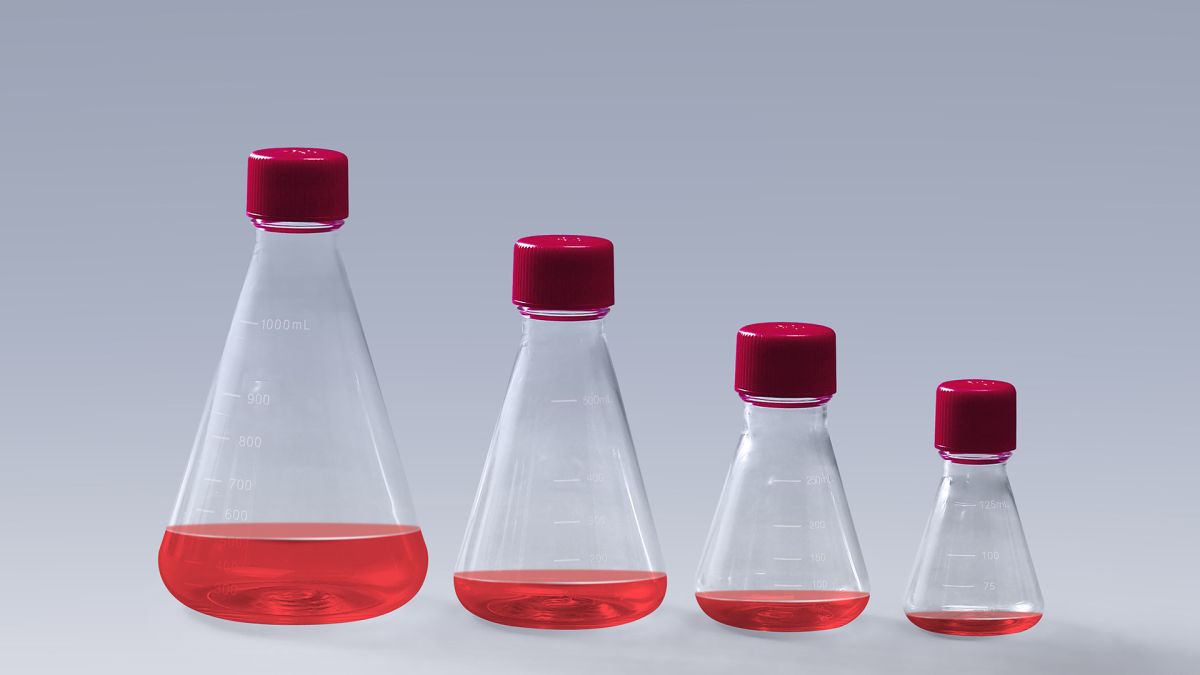
In this context, the Erlenmeyer Shake Flask plays a critical role in laboratory-scale plant cell suspension culture.
Why Erlenmeyer Shake Flasks Are Suitable for Plant Cell Culture
An Erlenmeyer Flask features a conical body, flat bottom, and narrow neck, allowing gentle and uniform mixing during orbital shaking. This design is particularly advantageous for plant cell cultures, where excessive agitation can damage fragile cells.
When used as an Erlenmeyer Shake Flask, the vessel enables:
Even suspension of plant cells without excessive shear force
Stable oxygen transfer suitable for slow-growing plant cells
Reduced foaming and cell aggregation compared to other vessel types
These characteristics make shake flasks a preferred choice for early-stage plant cell culture and process optimization.
Key Applications in Plant Cell Suspension Culture
1. Callus-Derived Suspension Establishment
Erlenmeyer Shake Flasks are commonly used to initiate suspension cultures from friable callus tissues. Gentle shaking promotes uniform cell dispersion while maintaining high cell viability.
2. Secondary Metabolite Production
Plant cells are often cultured to produce valuable compounds such as alkaloids, flavonoids, and polysaccharides. The controlled environment of an Erlenmeyer Shake Flask supports consistent metabolite accumulation during batch culture experiments.
3. Medium Optimization and Growth Kinetics Studies
Researchers frequently rely on Erlenmeyer Flasks to evaluate the effects of carbon sources, plant hormones, and nutrient composition on cell growth and productivity under well-controlled shaking conditions.
Design Features Supporting Plant Cell Culture
Modern Erlenmeyer Shake Flask designed for cell culture offer additional advantages over traditional glass flasks:
USP Class VI PETG or PC materials ensure excellent biocompatibility and optical clarity
Vent caps with hydrophobic membranes allow sterile gas exchange while preventing microbial contamination
Uniform wall thickness enhances durability during long-term shaking
Clear graduation marks enable easy monitoring of working volume
These features are particularly beneficial for long-duration plant cell experiments that require stable and contamination-free conditions.
Best Practices for Using Erlenmeyer Shake Flask in Plant Cell Culture
To maximize culture performance, the following considerations are recommended:
Maintain appropriate working volume (typically 20–30% of flask capacity) to ensure sufficient oxygen transfer
Use moderate shaking speeds to minimize shear stress
Select vented caps for aerobic plant cell cultures
Ensure cGMP-compliant, sterile flasks for sensitive applications
Conclusion
From suspension establishment to metabolite research, Erlenmeyer Shake Flask provide a reliable and cost-effective solution for plant cell suspension culture. Their gentle mixing characteristics, combined with advanced material and cap designs, make them an indispensable tool in plant biotechnology laboratories.
Whether for routine research or process development, the Erlenmeyer Flask remains a foundational vessel for plant cell culture applications.