
News
Kunststoff
Unternehmen
INNOTEQ 2023: Nachhaltige Swissness für die MEM-Industrie



Selecting the right cell culture flask involves more than choosing the appropriate growth area or surface treatment. The cap design of a flask can significantly impact gas exchange, contamination control, and overall cell culture performance.
Among the most commonly used options are vented cap cell culture flasks and plug seal cap cell culture flasks. While both are widely used in research laboratories, biopharmaceutical manufacturing, and cell therapy development, each type offers unique advantages depending on the application.
In this article, we compare vented cap vs plug seal cap cell culture flasks, explain their differences, and provide guidance on selecting the best option for your cell culture process.
What Is a Vented Cap Cell Culture Flask?
A vented cap cell culture flask is designed with a hydrophobic membrane filter integrated into the cap. This filter allows gases such as oxygen (O₂) and carbon dioxide (CO₂) to pass through while helping prevent microbial contamination.
The vented cap design enables continuous gas exchange without requiring the cap to be loosened during incubation.
Advantages of Vented Cap Cell Culture Flasks
Excellent gas exchange
Reduced risk of contamination
Convenient operation
Suitable for long-term cell culture
Supports optimal CO₂ balance
Because of these benefits, vented cap flasks are widely used for culturing adherent mammalian cells.
What Is a Plug Seal Cap Cell Culture Flask?
A plug seal cap cell culture flask uses a two-position cap design that allows users to control gas exchange manually.
The cap can be:
Closed Position
Provides a tight seal during:
Sample transportation
Media storage
Temporary handling
Vent Position
Allows gas exchange during incubation by slightly loosening the cap.
This traditional design has been used in laboratories for many years and remains a popular choice for routine cell culture applications.
Vented Cap vs Plug Seal Cap Cell Culture Flask: Key Differences
|
Feature |
Vented Cap Flask |
Plug Seal Cap Flask |
|
Gas Exchange |
Continuous |
Manual |
|
Contamination Protection |
Excellent |
Good |
|
Ease of Use |
High |
Moderate |
|
Transportation |
Moderate |
Excellent |
|
Long-Term Culture |
Recommended |
Acceptable |
|
CO₂ Incubator Compatibility |
Excellent |
Excellent |
The primary difference between the two systems is how gas exchange is managed during cell culture.
Why Gas Exchange Matters in Cell Culture
Most mammalian cells require a carefully controlled environment to maintain healthy growth.
Proper gas exchange supports:
Oxygen supply
Carbon dioxide regulation
Stable pH levels
Cell metabolism
Insufficient gas exchange may result in:
Slower cell growth
Reduced viability
Changes in cell morphology
For this reason, many laboratories prefer vented cap cell culture flasks for routine culture of adherent cell lines.
When Should You Choose a Vented Cap Cell Culture Flask?
A vented cap cell culture flask is often the preferred option for applications requiring consistent gas exchange and minimal handling.
Recommended Applications
CHO Cell Culture
CHO cells used in biopharmaceutical production benefit from stable oxygen and CO₂ exchange.
HEK293 Cell Expansion
HEK293 cells typically grow more efficiently in flasks with reliable gas transfer.
Stem Cell Research
Stem cells are sensitive to environmental fluctuations, making vented cap designs advantageous.
Vaccine Development
Vero cells and other adherent cell lines used in vaccine production commonly utilize vented cap flasks.
Benefits for Researchers
Reduced cap manipulation
Lower contamination risk
Improved process consistency
Simplified laboratory workflow
When Should You Choose a Plug Seal Cap Cell Culture Flask?
A plug seal cap cell culture flask may be more suitable when transportation or temporary sealing is required.
Recommended Applications
Cell Transportation
The fully closed position minimizes leakage during transport.
Sample Storage
Plug seal caps provide a secure seal for short-term storage applications.
Laboratories with Established Protocols
Some facilities continue using plug seal cap flasks because their procedures are already optimized around this design.
Benefits
Flexible sealing options
Reliable liquid containment
Cost-effective solution
Familiar operation
Which Cap Type Is Better for Large-Scale Cell Expansion?
For large-scale cell expansion and routine laboratory operations, vented cap cell culture flasks are generally preferred.
Reasons include:
Consistent gas exchange
Reduced handling requirements
Improved reproducibility
Lower contamination risk
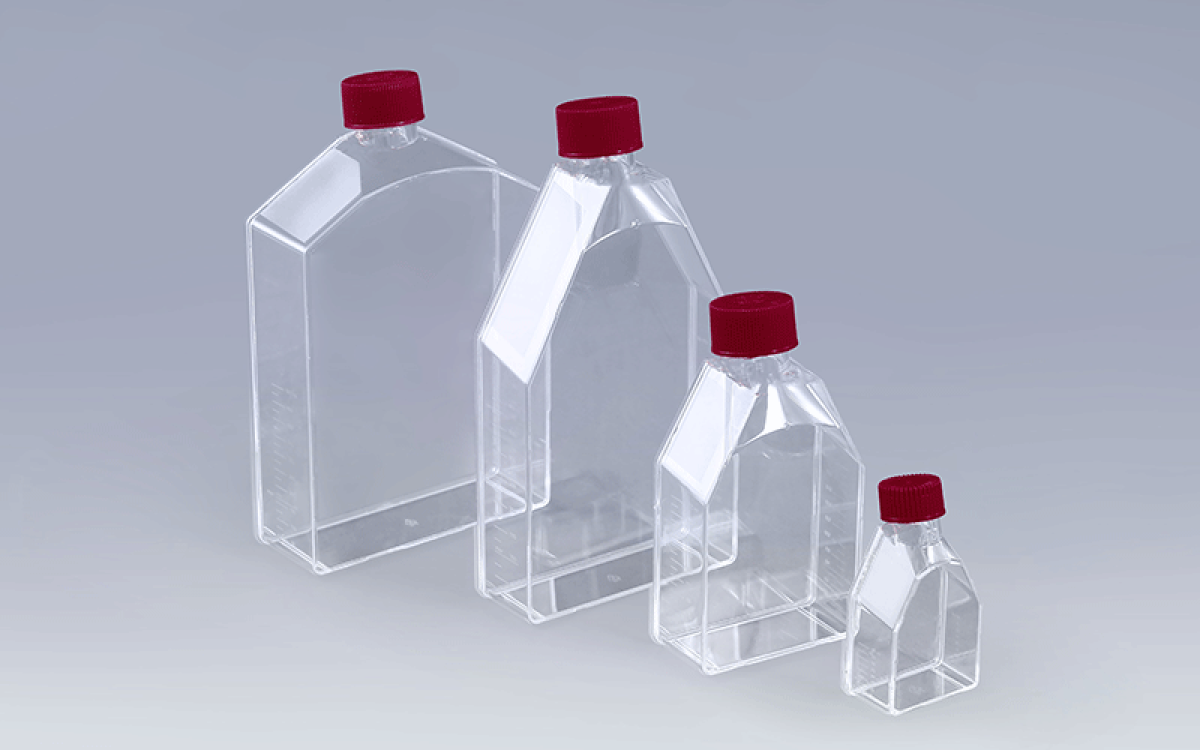
These advantages become increasingly important when managing multiple T75 cell culture flasks, T175 cell culture flasks, or T225 cell culture flasks simultaneously.
Choosing the Right Flask Size and Cap Configuration
When selecting a cell culture flask, researchers should consider both flask size and cap type.
T25 Cell Culture Flask
Ideal for:
Cell recovery
Cell line maintenance
Small-scale experiments
T75 Cell Culture Flask
Ideal for:
Routine cell culture
Research applications
T175 Cell Culture Flask
Ideal for:
Cell expansion
Process development
T225 Cell Culture Flask
Ideal for:
Large-scale adherent cell culture
Pre-production cell expansion
Most manufacturers offer both vented cap and plug seal cap options across these flask formats.
Factors to Consider When Purchasing Cell Culture Flasks
Before selecting a supplier, evaluate the following:
Surface Treatment Quality
Consistent TC treatment supports reliable cell attachment.
Sterility Assurance
Products should be manufactured in controlled cleanroom environments and supplied sterile.
Optical Clarity
High-transparency flasks enable easy microscopic observation.
Leak-Proof Design
A secure cap system helps reduce contamination and media loss.
Regulatory Compliance
Look for manufacturers operating under ISO-certified quality management systems.
Conclusion
Both vented cap cell culture flasks and plug seal cap cell culture flasks offer reliable solutions for cell culture applications. The best choice depends on your workflow, contamination control requirements, and gas exchange needs.
For most adherent cell culture applications, including CHO cells, HEK293 cells, stem cells, and vaccine-related cell lines, vented cap cell culture flasks provide superior convenience and gas exchange performance. Meanwhile, plug seal cap cell culture flasks remain a practical option when secure sealing and transportation are priorities.
By selecting the appropriate cap design and flask size, laboratories can improve cell growth consistency, reduce contamination risks, and optimize overall cell culture efficiency.