
News
Kunststoff
Unternehmen
INNOTEQ 2023: Nachhaltige Swissness für die MEM-Industrie


In the field of vaccine production and virology research, Vero cells are among the most widely used adherent cell lines. One of their defining characteristics is strong surface dependency, which makes the choice of cell culture flask critical for successful cultivation. Understanding how Vero cells interact with the surface of a cell flask can significantly improve cell growth, consistency, and experimental outcomes.
What Makes Vero Cells Surface-Dependent?
Vero cells are anchorage-dependent, meaning they require a suitable surface to attach, spread, and proliferate. Unlike suspension cells, they cannot grow freely in the medium. Their attachment relies on:
Surface charge and hydrophilicity
Availability of cell-binding sites
Surface treatment quality of the cell culture flask
Without proper adhesion, Vero cells may show poor morphology, reduced proliferation rates, or even detachment during medium changes.
Importance of Surface Treatment in Cell Culture Flask
A high-quality cell flask is typically treated to enhance cell attachment. Common surface treatments include plasma or corona treatment, which modify the polystyrene surface to improve wettability and protein adsorption.
For Vero cells, this means:
Faster initial attachment
More uniform cell distribution
Stable monolayer formation
Using untreated or low-quality cell culture flask surfaces can result in uneven growth and increased experimental variability—something especially critical in vaccine production workflows.
Growth Characteristics of Vero Cells in Cell Flask
When cultured in an appropriate cell flask, Vero cells exhibit:
Epithelial-like morphology
Strong adherence to the surface
Contact inhibition once confluency is reached
However, overconfluency in a cell culture flask can negatively impact cell health, leading to altered metabolism and reduced productivity. Monitoring confluency and passaging cells at the right time is essential.
Scaling Up: From Cell Flask to Cell Factory
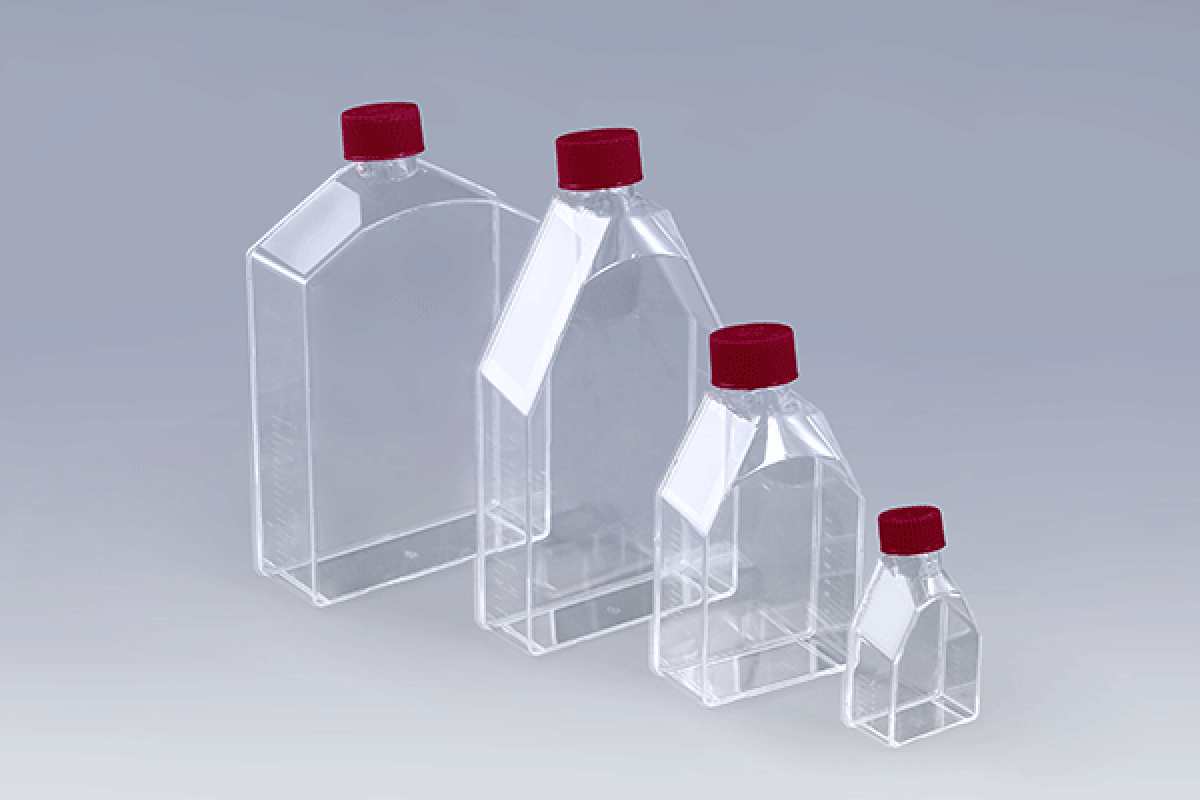
Due to their anchorage dependency, scaling up Vero cells requires maintaining sufficient surface area. Researchers typically transition from small-scale cell culture flask formats (e.g., T25, T75, T175) to larger systems such as multi-layer vessels or cell factories.
The key challenge is preserving:
Consistent surface treatment across formats
Cell attachment efficiency
Growth conditions
A reliable cell flask supplier ensures that surface properties remain consistent, reducing the need for process re-optimization during scale-up.
Key Considerations When Choosing a Cell Flask for Vero Cells
When selecting a cell culture flask for Vero cell culture, consider:
Surface treatment consistency – ensures reproducibility
Material quality (medical-grade polystyrene) – supports cell viability
Sterility and endotoxin levels – critical for sensitive applications
Vent/plug seal cap options – allows proper gas exchange
A well-designed cell flask not only supports robust cell growth but also minimizes contamination risks and experimental deviations.
Conclusion
The surface dependency of Vero cells makes the quality of the cell culture flask a decisive factor in culture success. From initial seeding to large-scale production, the right cell flask ensures reliable attachment, healthy proliferation, and consistent results.
For laboratories and manufacturers working with adherent cell lines, investing in high-quality cell culture flask solutions is not just a matter of convenience—it is essential for reproducibility and performance.