News
Kunststoff
Unternehmen
INNOTEQ 2023: Nachhaltige Swissness für die MEM-Industrie



Adherent cell culture plays a critical role in modern biopharmaceutical manufacturing, vaccine production, regenerative medicine, and cell therapy development. As demand for large-scale production of adherent cells continues to grow, researchers and manufacturers increasingly rely on Cell Factory systems for efficient and scalable expansion.
Compared with traditional T-flasks and roller bottles, Cell Factory systems provide a larger culture surface area, better space utilization, and improved process standardization, making them an ideal solution for industrial-scale adherent cell cultivation.
This article explores key strategies for optimizing adherent cell culture in Cell Factory systems and how proper process control can significantly improve cell yield, viability, and consistency.
Why Choose a Cell Factory for Adherent Cell Culture?
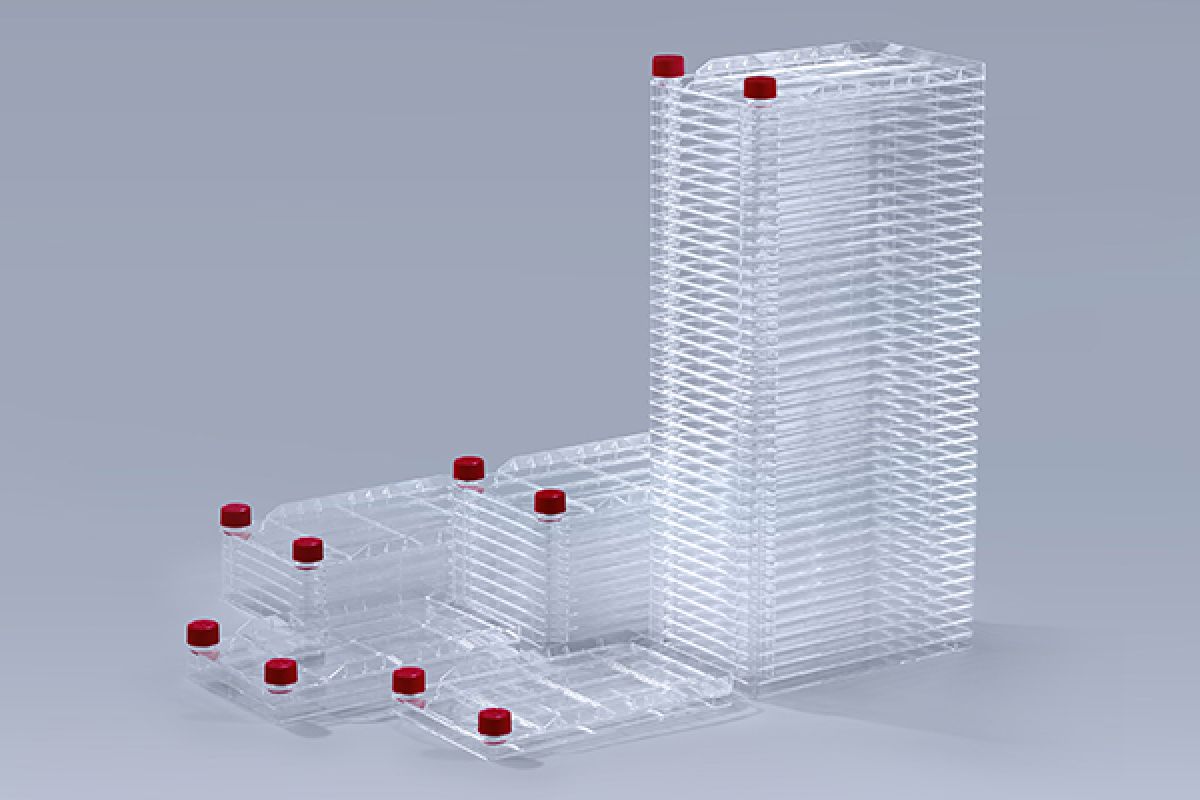
A Cell Factory is a multi-layer cell culture vessel designed for large-scale expansion of anchorage-dependent cells such as:
Vero cells
HEK293 cells
CHO cells
BHK cells
MDCK cells
Human mesenchymal stem cells (hMSCs)
Fibroblasts
Primary epithelial cells
These cells require attachment to a treated surface for proper growth, making Cell Factory systems highly suitable for vaccine production, viral vector manufacturing, and cell therapy workflows.
Key advantages include:
1. Large Surface Area for High-Density Culture
Multi-layer designs (1-layer, 2-layer, 5-layer, 10-layer, 40-layer) provide significantly increased growth area without requiring additional incubator space.
2. Reduced Contamination Risk
Closed or semi-closed handling systems minimize operator intervention and reduce contamination opportunities during media exchange and harvesting.
3. Better Process Standardization
Consistent vessel geometry and controlled surface treatment improve batch-to-batch reproducibility.
4. Lower Labor Costs
Compared with managing hundreds of T-flasks, Cell Factory systems simplify operations and improve production efficiency.
Key Factors for Adherent Cell Culture Optimization
Successful cell expansion depends on controlling several critical parameters.
1. Surface Treatment Selection
Surface properties directly affect cell attachment efficiency.
High-quality Cell Factory systems typically use TC-treated polystyrene surfaces that enhance hydrophilicity and improve cell adhesion.
For sensitive cell lines such as stem cells or primary cells, selecting reliable surface treatment is essential to ensure:
Rapid initial attachment
Uniform cell spreading
Stable proliferation
Reduced lag phase
Poor surface consistency often leads to uneven growth and reduced productivity.
2. Optimal Seeding Density
Seeding density strongly influences cell growth kinetics.
Too low:
Slow proliferation
Extended culture time
Reduced productivity
Too high:
Nutrient depletion
Premature contact inhibition
Poor cell morphology
Each cell type has its own ideal seeding range. For example:
Vero cells: typically moderate density
MSCs: lower density for better expansion potential
HEK293: optimized based on downstream application
Pilot-scale testing helps determine the best inoculation density for each process.
3. Uniform Cell Distribution
One common challenge in multi-layer Cell Factory systems is uneven cell distribution after seeding.
To improve uniformity:
Ensure proper leveling of the Cell Factory
Add cell suspension slowly and evenly
Allow sufficient attachment time before moving
Use gentle handling during transfer
Uneven distribution can cause localized overgrowth and poor harvest consistency.
4. Media Exchange Strategy
Efficient nutrient management is essential for high-density adherent cultures.
Consider:
Glucose consumption
pH stability
Dissolved oxygen
Metabolite accumulation (lactate, ammonia)
Partial media exchange often helps maintain stable culture conditions while minimizing cellular stress.
For sensitive cells, serum-free or chemically defined media may improve downstream compliance and reproducibility.
5. Environmental Control
Incubation conditions must remain highly stable:
Temperature: usually 37°C
CO₂ concentration: typically 5%
Humidity: >90%
Frequent incubator door opening can create fluctuations that negatively affect large-scale cultures.
Process consistency becomes increasingly important as production scales up.
6. Efficient Cell Harvesting
Harvest efficiency directly impacts final cell recovery.
Optimization includes:
Appropriate dissociation reagent selection
Controlled exposure time
Gentle detachment procedures
Minimal mechanical stress
For vaccine production, maintaining cell integrity during harvest is especially critical.
Common Applications of Cell Factory Systems
Cell Factory platforms are widely used in:
Vaccine Manufacturing
For expansion of Vero, MDCK, and BHK cells used in viral vaccine production.
Viral Vector Production
Large-scale adherent culture supports AAV, lentivirus, and adenovirus manufacturing.
Stem Cell Expansion
hMSC production for regenerative medicine requires reliable large-surface culture systems.
Monoclonal Antibody Development
Certain upstream adherent processes still rely on Cell Factory platforms before suspension adaptation.
Choosing the Right Cell Factory Supplier
Not all Cell Factory systems deliver the same performance.
When selecting a supplier, key considerations include:
Surface treatment consistency
Sterility assurance
Leak-proof sealing design
High optical clarity
Validated quality control reports
ISO-certified manufacturing environment
Stable bulk supply capability
Reliable supply is particularly important for biopharma companies and distributors managing long-term production planning.
Conclusion
Adherent Cell Culture Optimization in Cell Factory systems requires a combination of proper vessel selection, process control, and operational consistency.
From surface treatment and seeding density to media management and harvesting, every detail affects final productivity.
For laboratories, vaccine manufacturers, and biopharmaceutical companies seeking scalable adherent cell expansion, high-quality Cell Factory systems offer an efficient and reliable solution for modern cell culture production.
Choosing the right Cell Factory is not simply about increasing scale—it is about ensuring reproducibility, reducing risk, and supporting long-term manufacturing success.