News
Kunststoff
Unternehmen
INNOTEQ 2023: Nachhaltige Swissness für die MEM-Industrie



Cell expansion is a fundamental step in biopharmaceutical production, vaccine development, and cell-based research. Whether working with Vero cells, CHO cells, or stem cells, selecting the right culture vessel is essential for achieving optimal growth, scalability, and reproducibility.
From early-stage research to large-scale production, different culture systems offer distinct advantages. This article compares the most commonly used culture vessels to help you choose the best solution for your application.
1. Cell Culture Flask (T Flasks)
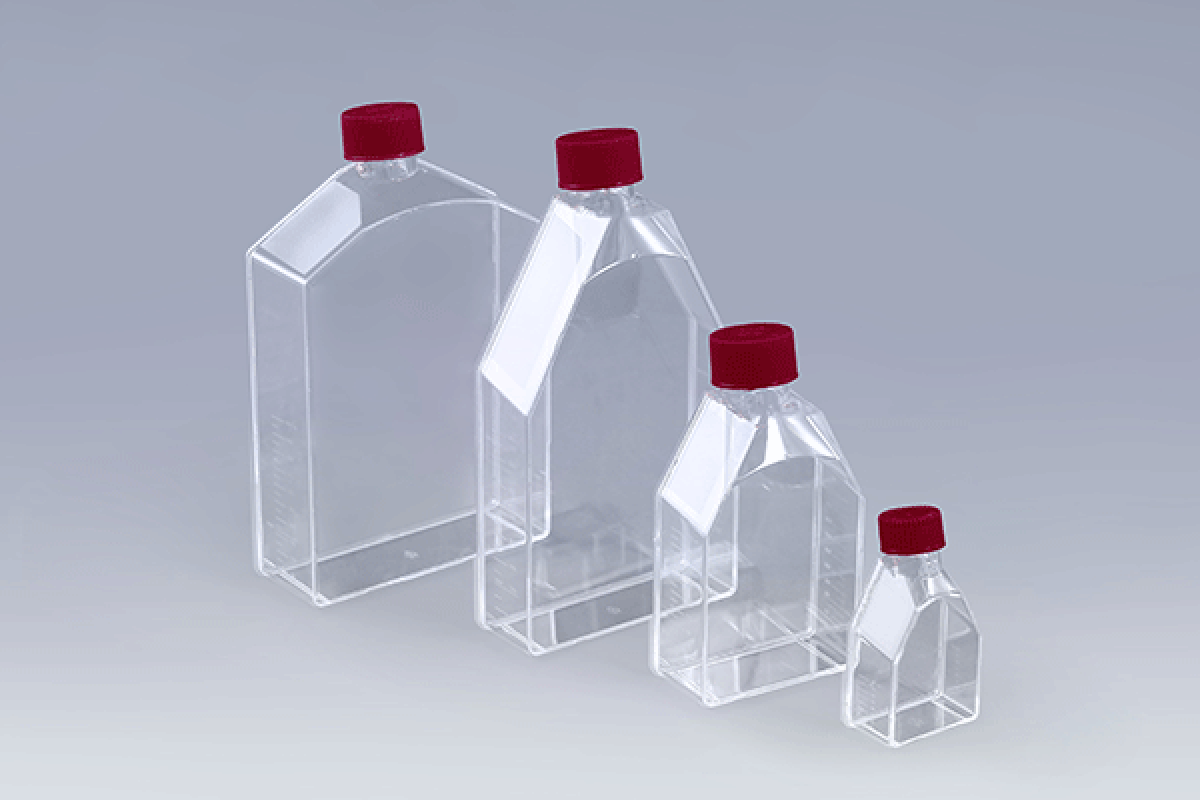
Cell culture flask, often referred to as T flasks, are the most widely used vessels for adherent cell culture in laboratories.
Key Features
Treated surface for cell attachment
Available in multiple sizes (T25, T75, T175,T225)
Easy handling and observation
Advantages
Ideal for early-stage culture and routine maintenance
Cost-effective and simple to use
Suitable for small- to medium-scale expansion
Limitations
Limited surface area
Labor-intensive when scaling up
Best Use Cases
Cell line maintenance
Seeding and early expansion stages
2. Cell Culture Dishes
Cell culture dishes provide a flat, open surface, making them suitable for imaging and experimental manipulation.
Key Features
Large growth area with low profile
Easy access for pipetting and observation
Advantages
Excellent for microscopy and assays
Uniform cell distribution
Limitations
Higher contamination risk due to open design
Not suitable for large-scale expansion
Best Use Cases
Imaging studies
Transfection and assay development
3. Roller Bottles
Roller bottles are cylindrical vessels that rotate during culture, increasing surface area and improving nutrient distribution.
Key Features
Continuous rotation system
Larger surface area compared to flasks
Advantages
Suitable for scaling adherent cells
Improved gas exchange and nutrient mixing
Limitations
Requires specialized equipment
More complex handling
Best Use Cases
Vaccine production
Intermediate-scale cell expansion
4. Cell Factories (Multi-Layer Vessels)
Cell factories consist of multiple stacked layers, significantly increasing the available surface area within a compact footprint.
Key Features
Multiple growth layers (e.g., 10, 40 layers)
Closed or semi-closed systems
Advantages
High surface area for large-scale expansion
Reduced contamination risk
Scalable and efficient
Limitations
Less convenient for direct observation
Requires experience in handling and media distribution
Best Use Cases
Large-scale production
Industrial bioprocessing
5. Spinner Flasks and Bioreactors
For suspension cells or microcarrier-based adherent cultures, spinner flasks and bioreactors provide dynamic culture environments.
Key Features
Agitation for uniform mixing
Controlled parameters (pH, dissolved oxygen)
Advantages
Scalable to industrial production
High cell density potential
Limitations
Higher cost and complexity
Requires process optimization
Best Use Cases
CHO cell-based protein production
Stem cell expansion on microcarriers
Choosing the Right Culture Vessel
The selection of a culture vessel depends on several factors:
Cell type (adherent vs suspension)
Scale of production
Process complexity
Budget and equipment availability
For adherent cells like Vero cells, a typical workflow may start with T flasks, move to roller bottles, and eventually scale up to cell factories. For suspension cells like CHO cells, bioreactors are often the preferred choice.
Conclusion
Each culture vessel plays a unique role in the cell expansion process. Cell culture flasks are indispensable for early-stage work, while roller bottles and cell factories enable scaling. Bioreactors offer advanced control for high-density cultures.
By understanding the strengths and limitations of each system, laboratories and manufacturers can design efficient, scalable workflows that ensure consistent and high-quality cell expansion results.