

News
Kunststoff
Unternehmen
INNOTEQ 2023: Nachhaltige Swissness für die MEM-Industrie



Selecting the appropriate cell culture flask size is a critical yet often underestimated factor in adherent cell culture. Flask volume directly impacts cell growth efficiency, workflow scalability, reagent consumption, and experimental reproducibility.
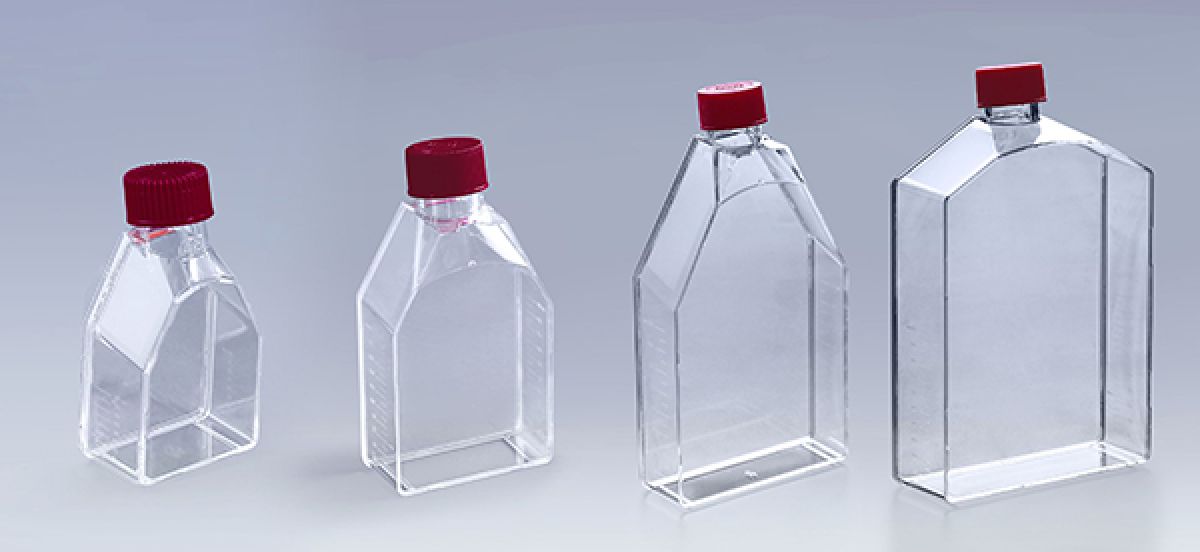
From early-stage recovery to large-scale expansion, T25, T75, T175, and T225 cell culture flask each serve a distinct role in modern laboratory workflows. This guide provides a structured, application-driven comparison to help you choose the right flask for your needs.
Why Cell Culture Flask Size Matters
Cell culture flask is more than containers — they define the growth surface area, media-to-cell ratio, gas exchange efficiency, and handling frequency. Choosing an inappropriate size can lead to:
Inconsistent cell density
Poor attachment or over-confluence
Increased contamination risk
Inefficient scale-up
Understanding how each T-flask size fits into the overall workflow is key to building robust and scalable cell culture processes.
T25 Flasks: Precision and Early-Stage Control
Best suited for:
Cell recovery after thawing
Clonal expansion and screening
Transfection condition optimization
Low-input or high-value cell lines
Why choose T25?
T25 cell culture flasks provide excellent experimental control when cell numbers are limited or conditions are still being optimized. The smaller growth area minimizes reagent usage and allows close monitoring of cell morphology and attachment, making them ideal for sensitive early-stage experiments.
Typical users:
Academic research labs, early R&D teams, assay development groups.
T75 Flasks: Routine Culture and Method Validation
Best suited for:
Daily maintenance of adherent cell lines
Medium-scale protein expression
Viral production pilot studies
Process reproducibility testing
Why choose T75?
T75 flasks strike a balance between surface area and manageability. They support stable cell growth without significantly increasing handling complexity, making them the most commonly used format in routine laboratory workflows.
Typical users:
Biotech startups, CROs, cell biology labs, process development teams.
T175 Flasks: Efficient Expansion and Scale-Up
Best suited for:
Upstream seed expansion
Viral vector preparation (AAV, lentivirus)
Cell banking preparation
Transition from R&D to pilot-scale production
Why choose T175?
With a substantially larger growth surface, T175 cell culture flasks enable rapid expansion while reducing the number of vessels required. This improves consistency across batches and lowers contamination risk associated with frequent passaging.
Typical users:
Biopharma process development groups, gene and cell therapy labs.
T225 Flasks: High-Density Growth with Minimal Handling
Best suited for:
High-yield adherent cell expansion
Protein and virus production requiring large cell numbers
Late-stage R&D or pre-GMP workflows
Preparing inoculum for multilayer systems or bioreactors
Why choose T225?
T225 flasks maximize surface area per vessel, allowing labs to scale cell production without increasing operational complexity. They are ideal when workflow efficiency and batch consistency become more important than experimental flexibility.
Typical users:
Advanced R&D teams, pilot manufacturing environments, scale-up operations.
How to Choose the Right Cell Culture Flask Size
Rather than selecting a single flask size, most laboratories use a progressive scale-up strategy:
T25 → recovery, screening, optimization
T75 → routine culture and validation
T175 → expansion and production preparation
T225 → high-density growth and scale efficiency
Your choice should be guided by:
Cell type and growth characteristics
Experiment stage (research vs scale-up)
Yield requirements
Available incubator space and handling capacity
Final Thoughts
Choosing the correct cell culture flask is essential for building reliable, scalable, and cost-effective adherent cell workflows. By aligning flask size with experimental objectives, laboratories can improve cell health, streamline operations, and support smoother transitions from research to production.
Whether you are optimizing early experiments or preparing for large-scale expansion, understanding the role of T25, T75, T175, and T225 flasks will help you make informed decisions at every stage.