
News
Kunststoff
Unternehmen
INNOTEQ 2023: Nachhaltige Swissness für die MEM-Industrie



Primary cell expansion is a critical step in many applications, including vaccine production, cell therapy research, and biopharmaceutical development. Compared with immortalized cell lines, primary cells are more sensitive, have limited proliferation capacity, and require stricter culture conditions. Choosing the right culture system is therefore essential.
Among various large-scale culture solutions, the cell factory has become a widely used platform for efficient and scalable primary cell expansion.
What Is a Cell Factory?
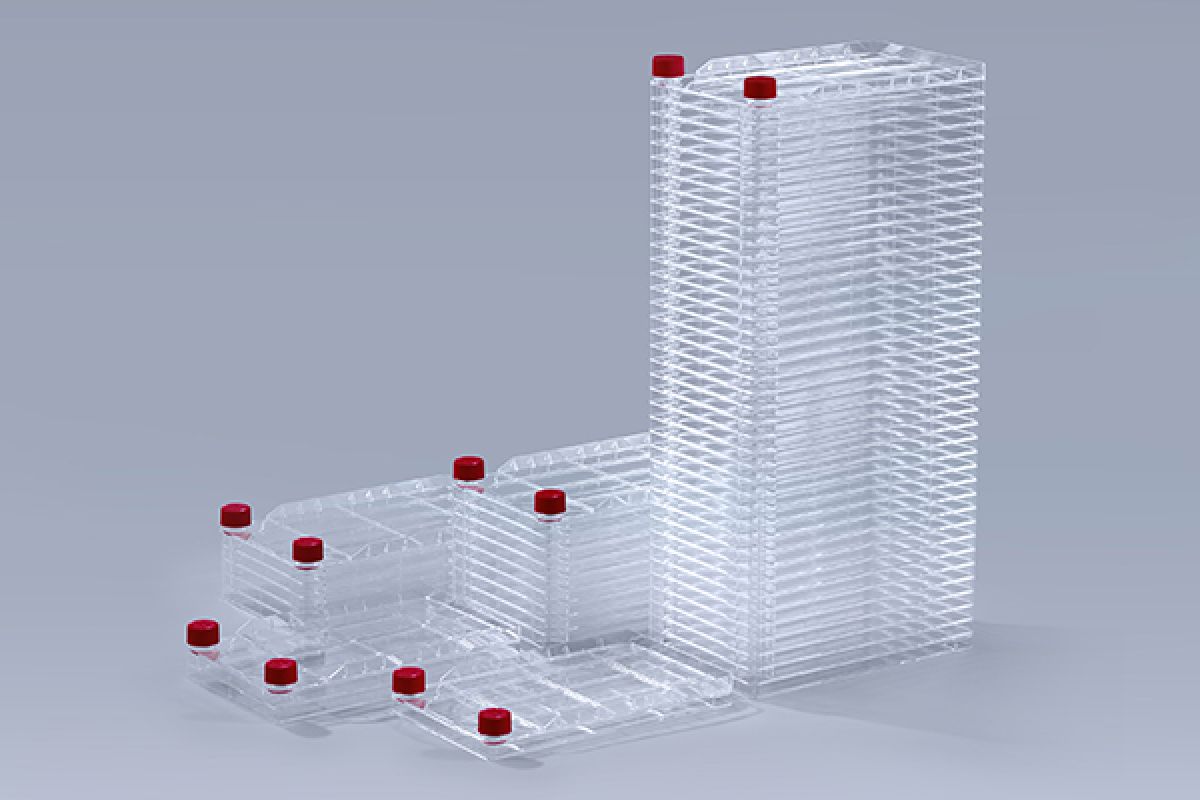
A Cell Factory is a multi-layer cell culture system designed to provide a large surface area for adherent cell growth within a compact footprint. It consists of stacked culture layers, allowing researchers and manufacturers to scale up production without significantly increasing incubator space.
Cell factories are commonly used for:
Vaccine production
Stem cell expansion
Viral vector manufacturing
Primary cell culture scale-up
Why Use Cell Factory for Primary Cell Expansion?
Primary cells require a stable, controlled environment. Compared to traditional cell culture flasks, cell factories offer several advantages:
1. Large Surface Area for Efficient Expansion
Primary cells are typically adherent and require sufficient surface area to grow. A single cell factory can provide the equivalent surface area of dozens of standard culture flasks, significantly improving expansion efficiency.
2. Reduced Handling and Contamination Risk
Using multiple flasks increases the risk of contamination due to frequent handling. Cell factories reduce the number of vessels needed, minimizing manual operations and lowering contamination risk.
3. Scalability for Upstream Processing
Cell factories allow stepwise scale-up—from small volumes to large-scale production—without major process changes. This is especially important for primary cells with sensitive growth characteristics.
4. Consistent Culture Conditions
With a closed or semi-closed system design, cell factories help maintain consistent temperature, gas exchange, and nutrient distribution across layers, which is crucial for primary cell viability and reproducibility.
Key Considerations When Using Cell Factory
To achieve optimal results in primary cell expansion, several factors should be carefully controlled:
Surface Treatment
Primary cells often require specific surface properties for attachment. Choosing tissue culture-treated surfaces enhances cell adhesion and growth.
Seeding Density
Proper seeding density is critical. Too low may slow expansion, while too high can lead to early contact inhibition. Optimization based on cell type is recommended.
Medium Selection and Feeding Strategy
Primary cells are more demanding in terms of nutrients. Regular medium exchange or perfusion strategies should be implemented to maintain cell health.
Gas Exchange and Layer Uniformity
Ensuring even distribution of medium and adequate gas exchange across all layers is essential, especially in high-layer cell factories.
Applications of Cell Factory in Primary Cell Culture
Cell factories are widely applied in:
Mesenchymal stem cell (MSC) expansion
Primary fibroblast and epithelial cell culture
Vaccine production using primary cells
Virus amplification and bioprocessing
Their ability to support large-scale adherent cell growth makes them an ideal choice for both research and industrial applications.
Advantages Over Alternative Systems
Compared to other scale-up systems such as roller bottles or bioreactors, cell factories offer a balanced solution:
Easier operation than bioreactors
Higher space efficiency than roller bottles
Lower equipment investment
Flexible scaling options
Conclusion
Using a Cell Factory for primary cell expansion provides an efficient, scalable, and reliable solution for laboratories and biopharmaceutical manufacturers. With proper optimization of culture conditions, cell factories can significantly improve yield while maintaining cell quality.
As demand for primary cells continues to grow in advanced therapies and biologics production, cell factories remain a key tool for achieving consistent and large-scale cell expansion.